Beyond Oncology: Functional Strategies to Support Cancer Patients and Survivors
What if the biggest gap in cancer care isn’t the treatment but what happens before and after? In this episode of ReInvent Healthcare, Dr. Ritamarie Loscalzo is joined by Dr. Nalini Chilkov, founder of the American Institute of Integrative Oncology Research and Education (aiioRE.com), to explore how functional practitioners can fill the urgent void left by conventional oncology.
Discover why building a body where cancer cannot thrive is essential, whether your client is recovering from treatment, living with cancer long-term, or wants to prevent recurrence. From terrain restoration and tumor microenvironment to nutrient repletion, blood viscosity, immune modulation, and glycemic control, this episode uncovers clinical strategies every practitioner needs to know to better support cancer patients and survivors.
What’s Inside This Episode?
- The distinction between the “disease team” and the “health team” and why both are vital
- Why the tumor microenvironment and terrain may matter more than the tumor itself
- The blood markers that reveal hidden risks that are often missed by oncologists
- How glycemic control and inflammation increase cancer recurrence by up to 40%
- The often missed danger of fibrin clots in cancer patients (and what to do about it)
- Why many patients develop autoimmune disease after immunotherapy and how to modulate without overstimulation
- Practical tips to rebuild the microbiome and blood-brain barrier post-treatment
- A new way to think about melatonin, vitamin A, zinc, and omega-3s in cancer support
- How to talk to oncologists and position yourself as an essential part of the care team
- Why terrain restoration and functional support matter most after cancer treatment ends
Resources and Links:
- Download our FREE Metabolic Health Guide here
- Join the Next-Level Health Practitioner Facebook group here for free resources and community support
- Visit INEMethod.com for advanced practitioner training and tools to elevate your clinical skills
- Check out other podcast episodes here
Guest Resources and Links
- Visit OutsmartCancer.com for free recipes, educational tools, and the Outsmart Cancer Roadmap (coming soon)
- Practitioner training and professional resources at aiioRE.com
- Chilkov Clinic – NaliniChilkov.com
- Social Media:
- Facebook: facebook.com/DrNalini
- Instagram: instagram.com/drnalinichilkov/
- LinkedIn: linkedin.com/in/nalinichilkov
Guest Bio
Dr. Nalini Chilkov is a leading authority and pioneer in the field of Integrative Cancer Care, cancer prevention, and immune enhancement.
She is the Founder of the American Institute of Integrative Oncology Research & Education and creator of the OutSmart Cancer System teaching clinicians and patients whose lives have been touched by cancer how to Create a Body Where Cancer Cannot Thrive.
Dr. Chilkov’s OutSmart Cancer Programs are recognized as the most comprehensive, science based, safe and natural programs for supporting cancer patients, survivors, and those who do not want to get cancer to Get Well, Stay Well and Live Well.
Dr. Chilkov is the author of the best selling book 32 Ways to Outsmart Cancer, How to Create a Body Where Cancer Cannot Thrive.
With more than 35 years of clinical experience combining the best of modern functional medicine with the ancient wisdom of traditional Oriental and natural healing, Dr. Chilkov is a seasoned clinician and an innovator, building bridges between modern and traditional healing paradigms and partnering with physicians to achieve the best outcomes for patients.
Transcript
Dr Ritamarie
So what if the biggest gap in cancer care was not the treatment itself, but what happens before and after? Most oncology protocols focus on killing cancer cells, but they rarely focus on changing the terrain, helping their patients and their clients to strengthen their resilience.
So in today's episode, we're going to be talking about what's missing from conventional oncology and how practitioners can help fill the gap by helping patients to become aware and create a body where cancer doesn't want to grow. It just can't survive and thrive.
And today, we are diving into one of the most urgent and underserved areas in modern medicine. It's one of my dear friends and favorite people in the world. And we're helping people to support cancer patients and survivors beyond the oncology ward. So Dr. Nalini Chilkov is the founder of the American Institute of Integrative Oncology. It's a research and education foundation.
She's a leading authority in innovative creative cancer care, cancer prevention and immune resilience, which is that piece that so many people miss. She created a system called the OutSmart Cancer System that teaches patients and practitioners how to create a body where cancer can't thrive. She's a pioneer in integrative cancer care. She's had over 35 years of experience bridging the gap between functional medicine, traditional oriental medicine, and natural healing and helping people.
Her goal is to help people get well, stay well, and live well. She's helped to shape a whole new model for oncology, and she helps empower patients to reclaim their health through every stage. Instead of ending cancer care without hair, feeling depleted and faded, she is helping them to live a life where they can thrive. So welcome, welcome. I'm so excited to have you here.
Dr. Nalini Chilkov (02:29)
Thank you, dear.
Dr Ritamarie(02:31)
So let's look at this as practitioners, as the front line people, who can help them to optimize and support long-term recovery. We're not going to treat them for cancer. We are going to help them. Number one is to prevent cancer. Those are the people who have either had it before, we don't want to have a recurrence, but also people with family history. I'm sure you see a lot of people like that.
I don't want to get cancer. My sister had it. My brother had it. I don't want to get it. But also after, right? And that's the forgotten group that doesn't really get much care after they've had their chemo or radiation or surgery or whatever. So I am super excited to have you here. So why did you get into this? And how did you get into this?
Dr. Nalini Chilkov (03:17)
Well, everybody has a personal story, I think. Both of my parents were diagnosed with cancer in their 50s. And so that got my attention, made me think about our family's susceptibility, but also I was bearing witness to everything that was missing in their care. Now, the good news is my dad died at 90, and my mom died at 88, and they were both cancer free. So they were diagnosed in their 50s, right?
So that's the good news. But there is so much missing. Not only do we all know that conventional care, in general, is not individualized or personal, but there is no health model. And so what is desperately needed to have right from the beginning a health team along with your disease team. So you need experts for both, right? And hopefully there is mutual collaboration and respect and then that's the best for the patient is to have disease experts and health experts. But then as you state, when you're done, then you really need a plan to recover, but also then to stay well and live a long healthy life.
And, there is also another segment of patients, I think, that doesn't get addressed, which is those people living with cancer as a chronic illness long term. And so that's another set.
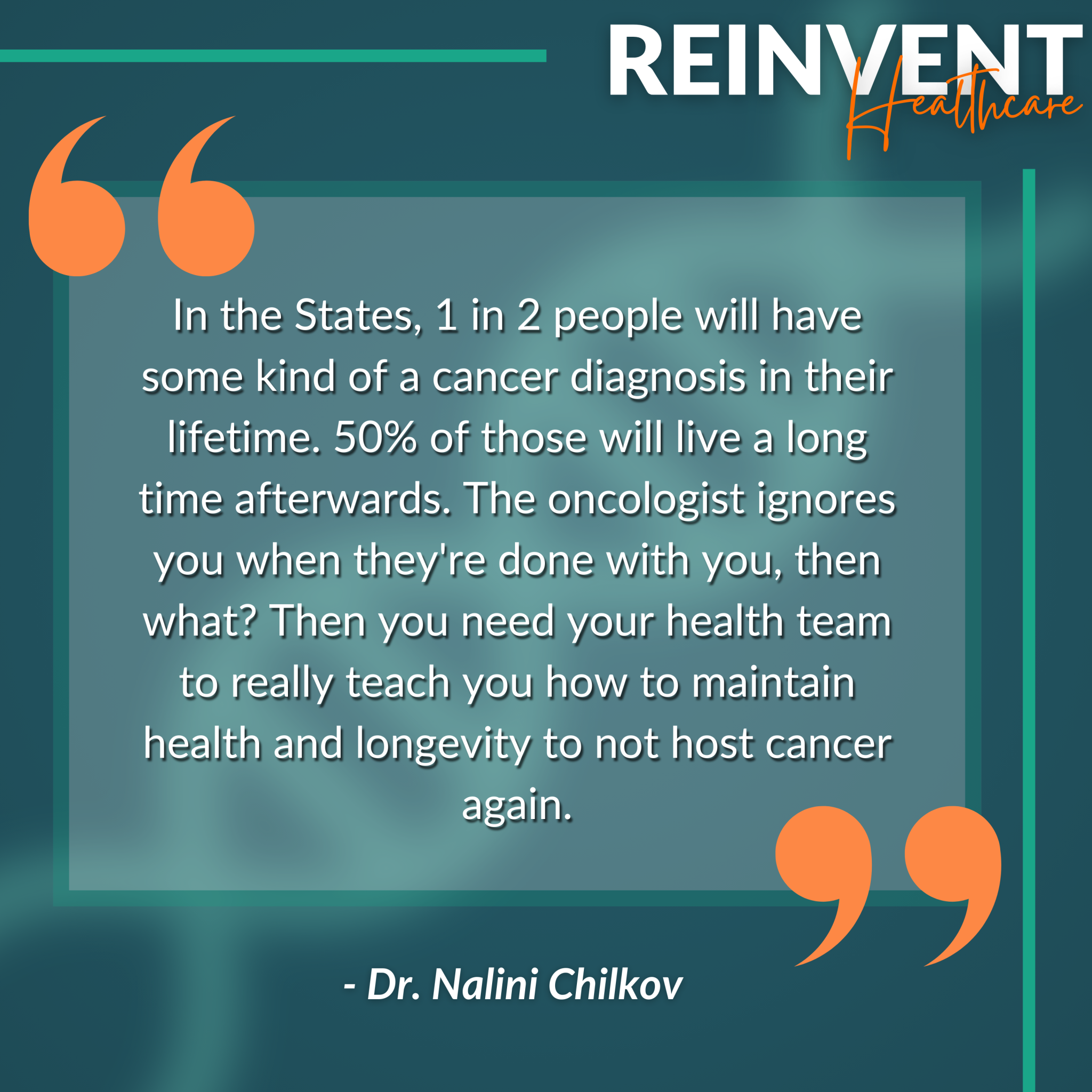
So I'm always asking, what is the oncologist not doing? What's the oncologist not addressing? And so that's a big population of people that needs a lot of support also. And there's now, in the States, one in two people will have some kind of a cancer diagnosis in their lifetime, but about 50% of those will live a long time afterwards. So the oncologist ignores you when they're done with you, then what, right? So then you need your health team to really teach you how to maintain health and longevity in a body that's not going to host cancer again
post cancer again, right?
Dr Ritamarie (06:34)
To keep that pushing it away or maybe not. Maybe that's a negative way to say it, to make your body inhospitable.
Dr. Nalini Chilkov (06:44)
I think that's a better way to say it. You know, and we use this metaphor of the cancer terrain, the tumor microenvironment, the soil in the garden. If you change the soil, you change what grows there. And so from the clinician's point of view, the tumor microenvironment is a signaling environment. And so we want to be able to have these epigenetic effects where we are influencing tumor suppressor genes to activate the expression of those genes. And then we want to inhibit the expression of tumor promoter genes. And so this is really an epigenetic chemistry lab that we're in.
Dr Ritamarie (06:28)
It makes sense, right? So if we're looking at somebody, I do a lot of genetic testing and look at people's genes and people get freaked out if they see that they have genes that predispose them to cancer. So what's the best way for us as functional practitioners who are working with these people? They don't have cancer yet, but they've looked at genes, or they have that family history. Let's start there, right?
How do you work with that terrain and that epigenetic expression?
Dr. Nalini Chilkov (07:01)
So, you asked me, how did I get into it? So both my parents had cancer in their fifties, right? And so then what am I going to do not to express those potentials, those vulnerabilities? Cancer, like any complex syndrome, is really multifactorial. And so we can't grab onto one SNP, or one gene, and say, that's it.
5% of all cancers are actually known to be driven by genes. So the BRCA gene is an example of a breast cancer gene that if you do have that, the risk of cancer, getting cancer, and having an aggressive cancer young in your life is high, but that's the exception. When you talk about genetics, what is more common is, does a person have inflammation issues? Do they have detoxification issues? Is their gut microbiome in good order? All the things that cause health also cause us to resist cancer.
So as functional medicine clinicians, we're well prepared to serve this patient population. And I think, in general, a lot of clinicians are frightened and feel uncomfortable that they don't have the competence or the knowledge base to work with this patient population. But in fact, if you know what a health model is, and you know how to assess a patient's functional medicine, look through that lens of all their functional systems, and give them robust immunity, inflammation control, and glycemic control. All of these things influence cancer.
For example, glycemic control is a huge problem in America. Many clinicians do not know that having hyperglycemia and hyperinsulinemia increases your risk of cancer 40%, increases your risk of recurrence 40%.
So these are things we're already addressing in our practice, right? Yes.
Dr Ritamarie (09:00)
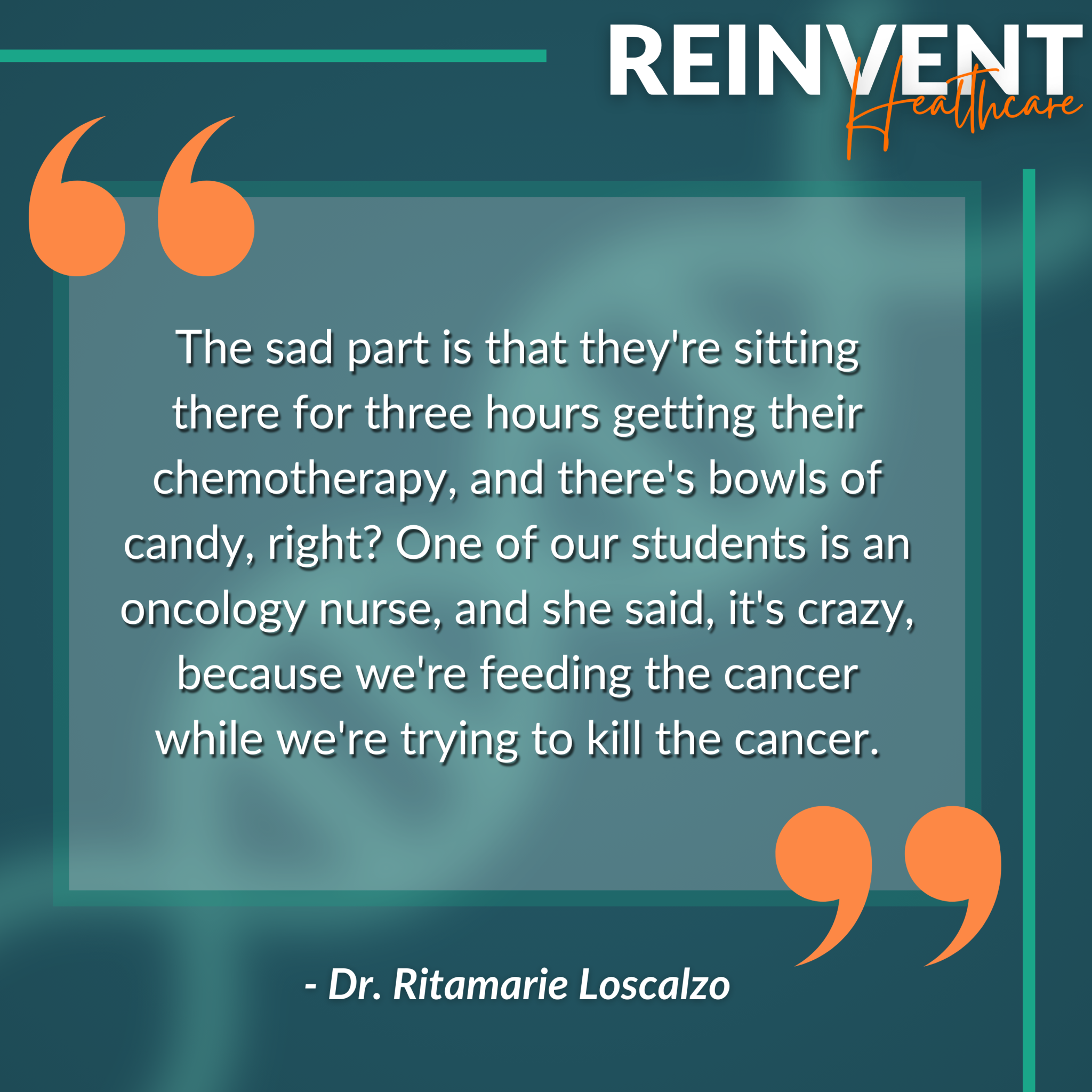
That's a big number. We are, and the sad part is that these people go in, and they get their IVs, and they're sitting there for three hours getting their chemotherapy, and there's bowls of candy, right?
One of our students is an oncology nurse, and she said, it's crazy, because we're feeding the cancer while we're trying to kill the cancer.
Dr. Nalini Chilkov (09:20)
Yes. Well, and here's something I've really learned by interacting with oncology teams, because I think things get polarized, and I've always been interested in being a bridge builder and developing collaborative relationships. And so what I realized is a lot of times when an oncologist objects to what we're doing, or a patient comes in and says, I want to take supplements, or I'm not eating sugar. The oncologist says, that doesn't make a difference. But what their mindset is, I've learned, is they think we're trying to treat cancer by our interventions, but what we're trying to do is everything they're not doing.
So I explain that to the oncologists. I say, we understand your therapies have an important part in this patient's successful outcome, but these are all the things you don't do.
And so we're here to help support the health of this patient so that that patient can have the absolutely best outcome possible, stay robust, stay resilient, tolerate the treatment, and recover from it, and then have a lower risk, not only of adverse effects during treatment, but also have a lower risk of a recurrence or a much longer time to recurrence. So the oncologists can hear that, right? They can hear that. So I like to clarify that with the oncologist who's saying what you do doesn't matter.
Dr Ritamarie (10:42)
I like that. We're doing what you're not doing. And we're going to help this person with resilience and the entire treatment recovery. So you're going to have more success. Right?
Dr. Nalini Chilkov (10:56)
Yes. It's a win-win all the way around. And the oncologists that I have formed close relationships with here in Los Angeles, where I practice, which admittedly is a very open-minded and collaborative community anyway. The docs that I work with closely, they see that patients do better when they have this kind of support.
Just think about when you are undergoing surgery or chemotherapy or immunotherapy, your digestive tract is completely inflamed. And so a lot of the weight loss that patients experience is their appetite is gone, because they're so inflamed, and it's painful to eat, and then they have diarrhea or constipation. And if we fix that, then they are robust and strong. They're getting nutrients, they're getting calories, their muscle mass is being protected. All of these things that are about doing something hard and doing something challenging, right?
Dr Ritamarie (11:54)
Right? Exactly. Exactly. So you created this program called Outsmart Cancer, your system is called Outsmart Cancer. Tell us about that. What's involved with that?
Dr. Nalini Chilkov (12:04)
What I say to the patient is you need to have a body that will not host cancer. And I give this soil in the garden metaphor and that we have to build you a new body, and we have to build you a new immune system. We have to take control of all the things that you need to have to be supported. And so patients can hear that. And there are four implementation pieces.
One is dietary guidelines. So that's the Outsmart Cancer Diet. And then there's attached to that Outsmart Cancer Shakes, because protein repletion is extremely important. In fact, protein optimization is important. So minimum 100 grams of protein a day, because cancer itself produces sarcopenia.
And also the stress of surgery or radiotherapy or chemotherapy produces a physiology which is very demanding, and we need that rebuilding capacity. And if patients cannot eat a lot of foods, a lot of cancer patients just don't feel like eating or not interested, I have them do free-form amino acids just to get that amino acid adequacy and use a shake.
So the OutSmart Cancer Shake is an insurance policy that I put in so that we know they're going to get calories and nutrients and fiber and plant chemicals every single day. And so sometimes that serves patients who aren't feeling well enough to eat that they can maintain, right?
And then there's the OutSmart Cancer Supplements. So they are what I call foundation supplements to meet the unique nutritional needs of this patient population. And then there are targeted supplements that might be signaling the type of cancer they have or their immune system, or maybe they're also an autoimmune patient, or maybe they're also a diabetic patient. So we have to do the more targeted part. So there are the supplements and nutrients.
And then there's what I call OutSmart Cancer living. So what are the lifestyle interventions that are so important to really transform immunity and resilience and strength and emotional centeredness and all of that? So those are the sort of four pillars.
From the clinician side, what we want to be concerned about is understanding the type of cancer that the patient has. And just from the general practitioner primary care, is this an estrogen driven cancer? Is this a digestive cancer? Has the patient had a part of their digestive tract removed?
Are they on immunotherapy? So we want to be careful not to over stimulate them or suppress them. So to understand sort of what's inside the diagnosis and then to understand the aggressiveness of that disease also, because that informs how we're going to plan for that patient, and how we're going to talk to them also. It's a lot. I ask a lot of my patient, but then you get to be the exceptional patient.
So, to explain to the patient, you have an aggressive cancer. We need to be aggressive too, right? And so it motivates them. And so there's that piece.
Then you want to understand the biosystem that is hosting the cancer. And so that's kind of where we have our expertise, and where oncologists don't look at all. And so all of these things.
Then the third layer you want to be interested in is what is the macro environment, which we also pay attention to have they had toxic exposures.
Are they in a stressful marriage? Do they live in a neighborhood that is near an airport, and they can't sleep, and there's jet fuel they're inhaling all the time. So we want to understand all from the micro to the macro, what's going on. And that's the lens of functional medicine anyway.
So that's kind of natural to us, but where the knowledge base is needed for clinicians is understanding that tumor micro environment at that cancer terrain. And how can we leverage that? And how can we engage patients in making lifestyle changes, which is the hardest part sometimes?
Dr Ritamarie (16:25)
Well, we know that, right? Getting people motivated and inspired. And I think cancer as a diagnosis can be that if they buy into the fact that they can do it. It's not like you have a stubbed toe or an inflamed elbow, right? This is much more life threatening. And you said the terrain, and the tumor terrain, or the cancer terrain, the pathology, how do you, the clinicians that are listening here, we're health coaches, nurses, doctors of all sorts, acupuncturists, how do we know that? More than is it aggressive or not?
Dr. Nalini Chilkov (17:06)
So here's how I think about it. Imagine a wheel with many spokes on it. And those are all factors on the spokes of that wheel. So we've mentioned a couple of them. Let me do it in a cohesive way.
So number one, what's the inflammatory state of the patient? Do they have pro-inflammatory cancer? Are they on pro-inflammatory treatments? So consider inflammation as a factor you need to assess and consider glycemic control.
So we tend to always look at that anyway, but are they on steroids also? That's going to signal, why do they have hyperglycemia? It may be a drug adverse effect, right? So you want to understand what's driving things that are pathology.
For example, as a primary care clinician, say somebody comes into you who's a cancer survivor, and they are complaining of fatigue. You don't immediately go check their thyroid. You wonder if their bone marrow has been ablated by chemotherapy. And the reason they're tired is they don't even have enough blood cells. So we need to think differently about the experience. So bone marrow health is on the list, okay? It's on one of the spokes of the wheel.
What is the function of the bone marrow? Are there enough blood cells of all kinds? What's the status of red blood cells? What's the status of immune cells? What's the status of the platelets and the clotting capacity?
So in that terrain hypercoagulation is a risk factor. The cancer physiology itself produces an effect that creates more fibrin clots and more risk for thrombus.
And so this is something that oncologists are very aware of, but they kind of don't do anything about it, because their anticoagulant drugs are too strong for what's happening. So that's a place we really can intervene.
40% of all cancer patients with solid tumors have a stroke or a pulmonary embolism, 40%. So a cancer patient doesn't need that on top of their cancer. So I monitor Fibrinogen and D-dimer, okay? Because of the clotting activity, fibrinogen activity, but remember if somebody's hyperinflamed, they're also more likely to form a thrombus.
And if they're dehydrated, they're going to be more likely to form it. So, you know, there's all these pieces.
That's something we can really intervene on, proteolytic enzymes in these patients. But the problem is that that's really great for inhibiting platelet aggregations, but cancer patients form fibrin clots. So we need Lumbrokinase for that. And so sometimes the oncologist is nervous about anticoagulants, because platelets tend to be low in cancer patients, but it's the fibrin clots that are dangerous. So it's not too dangerous to do what we're doing.
And let's say you give a patient some things that inhibit thrombus formation like omega-3 fatty acids and curcumin and boswellia and Lumbrokinase. So you give them all that and then they start to bruise easily, or they start to have bleeding when they brush their teeth. And just back off, because here's the thing, the stuff we use has a really short half life, like maybe a few hours.
So it's really hard to hurt people. So if you went in the wrong direction, and it's not quite right, just back off, right? Just stop. But that requires a clinician to have meticulous observation of the patient. Okay. And to tell the patient what to report.
I'll just tell an extreme story. I had a patient in my office, I used to do acupuncture, and I had a patient who came in, and a lot of chemo patients have a port in their arm. So this patient had a chain of blood clots below the port. And so that was like a big scary risk, right?
So in front of the patient, she's on my table, I take out my cell phone, and I call the oncologist, because I have her cell number, and I go, I have your patient on my table and she has three blood clots right below her port, and I think she needs to be anticoagulated. And so the oncologist said, yes, send her right in. But you see, that is because I, as her clinician, knew that that was that risky, right?
Our hands, or our eyes and awareness, are on patients we share with an oncologist. They're not seeing the patient that often. They don't have that much time. They're not always in the infusion room. It's the nurses that are with the patients. So our eyes and ears are of value too, right? And, so that's really important that we can be on the team in a super valuable way.
So coagulation, big risk factor. So we can do a lot about that. Absolutely.
Dr Ritamarie (22:17)
Can I ask you a question about that? You mentioned Lumbrokinase versus natokinase, serratopeptidase, that kind of thing.
Dr. Nalini Chilkov (22:23)
So what we need in this situation, somebody who is forming fibrin clots is different than a patient that we give aspirin to, for example. So most of our nutraceuticals and botanicals inhibit platelet aggregation, which is when platelets stick together and form a clot. But what's happening with cancer patients is they have fibrin clots. So fibrin is a sticky protein, and it forms these big sticky clots that are really dangerous. And so that's what we need to inhibit.
So most of our stuff doesn't do that. Lumbrokinase is a fibrinolytic, okay? So it's really important to understand that because otherwise you're not inhibiting this other part of thrombus formation, which is not present in all patients who form clots, but it is in cancer patients.
Dr Ritamarie (23:18)
Okay, but Lumbrokinase does, you're saying. It’s fibrinolytic. Okay, so when we see fibrinogen activity elevated, does that mean that they are forming fibrin clots?
Dr. Nalini Chilkov (23:27)
They're in a tumor microenvironment, they're in a terrain where their blood is sticky. And so D-dimer is when those fibrin moieties break up into two parts, there's D-dimer that's floating around in the blood. So that tells you there was a big clot, and it's breaking up. No, not as small, that it's just in this process. You know there's fibrin going on, that's dangerous. So that their blood's really sticky.
So you can also get a sense of the stickiness of the blood by looking at CRP, HS-CRP. You can also just look at other inflammatory markers that are common like sed rate. And if white blood cells are elevated, you have a sticky situation.
The patient's dehydrated? You have sticky, they're sedentary, their blood's not moving. These are the patients at risk. And so we want to do everything to help that patient not have an event, right? So the oncologist is not paying attention. So we can do that. We can do that, right? So that's really, really important.
So we look at inflammatory factors. We look at the microbiome, right? Because we know that that is crucial to immunity and inflammation control. But this is really interesting.
Recently, we've learned that the patients with healthy microbiomes have a better therapeutic response to chemo and a better therapeutic response to immunotherapy, like dramatically better response to immunotherapy.
Right now, 20% of all patients respond to immunotherapy drugs. And if they have a healthy microbiome, we push our patient into that 20% that is going to respond. So, I mean, it's not complicated to do that, right? But understand a patient who has had surgery, or has had radiation to the abdomen or pelvis, or has had chemo, or has had steroids, has had their microbiome disrupted. And you don't need to test it, you can just know there is a mess in their microbiome.
We want to be careful in doing excessive amounts of blood tests for patients whose bone marrow is compromised. They already don't have enough blood cells, so we have to be conservative and thoughtful about what we test.
So vitamin D is on this mandala, is one of the spokes on the wheel, because vitamin D, 25-0H vitamin D, has over 50 functions, and has a huge impact on cancer immunity. But of course, we know it has an impact on bone, and on the brain, and also on the endothelium of the arteries. So we're going to make it less sticky in there for them. So the goal for vitamin D status, 25-0H vitamin D status is between 75 and 85. And a lot of oncologists will get alarmed and say that's too high, but they aren't educated about the importance of vitamin D in cancer immunity.
Also, vitamin A and zinc are very important in cancer immunity. So I like serum zinc to be somewhere like between 80 and 100 for cancer patients. And you just can check serum, you don't need to do red blood cell. And it's good enough for this setting.
We have to be mindful of tests that are easy for these patients to get and that their insurance will cover, also. So I think it's certainly fine. And I like zinc and copper to be in a one-to-one ratio, because copper drives cancer. Copper drives metastatic progression. So we want to have adequate zinc there to oppose the copper.
And then vitamin A, we can monitor vitamin A, and sometimes you'll see that listed as retinoic acid on the lab test menu. Vitamin A, I want that to be at least in the middle of normal, because vitamin A increases cancer immunity, increases viral immunity, and also, of course, it makes all the epithelial linings repair. And so those are being sloughed off during cancer and radiation therapy, so we can accelerate the repair.
So these are some of the things I test. I look at hemoglobin A1C. I look at insulin. I look at fasting blood sugar. But remember, these patients, a lot of them are either on steroids, or their cortisol is high. So again, you just have to have context. What are you looking at, right?
So the hemoglobin A1C gives you a little bit more functional insight, of course that's your expertise. But also then you have to think about kidney function in these patients and liver function in these patients.
Also we look at the CBC, we look at the neutrophil to lymphocyte ratio. This is a prognostic predictive biomarker of immune capacity, inflammatory state, but also risk of recurrence, risk of progression. So the neutrophil to lymphocyte ratio should be below 4 to be in a low risk zone. But really if it's below 2, super low risk.
So our goal, if you have good immune robustness and good inflammation control and healthy bone marrow, then you're going to have a healthy neutrophil to lymphocyte ratio.
So these are things that go on the spokes of that wheel that are accessible to us to measure, right?
I have a paper on how common blood tests reflect cancer risk. And that's a bonus for everybody who's listening so that you'll cheat sheet for everything I just said.
Dr Ritamarie(29:41)
We'll put the link down below for the cheat sheet. Everybody needs to download it.
Dr. Nalini Chilkov (29:44)
To know that even if you didn't order the blood tests, a lot of blood tests you're looking at are going to have these things on it. So I look at eGFR, look at kidney filtration, because patients who have received platinum drugs, oxaloplatin, carboplatin, cisplatin, they have nephron damage. And so we want to be looking at that.
We can protect these patients with milk thistle while they're in therapy. The high oxidative stress chemotherapy agents damage DNA, damage mitochondria. And so the more high metabolizing cells will be more damaged. So that's where we see side effects, right?
The bone marrow is a fast dividing place, the neurons, fast dividing the brain, right? Heart muscle. So these are where we see damage from these drugs, right? Where there's high metabolic rates of cells, where there's lots of mitochondria.
The kidney falls into that category. This is where we see the side effects or the hair loss. So it's your fast dividing cells that are hit first when those are the therapies.
Let's talk about patients who have had immunotherapy, either they're undergoing it, or they have a history of it. These are patients pushed into autoimmune syndromes by the therapy. And so if you have a patient in your office who has a history of immunotherapy, they're going to have chronic autoimmune disease for the rest of their life. So we know how to control that. So oncologists don't have any training in this whatsoever. And all they do is throw steroids at it. And so I've had many conversations with oncologists.
We're not doing steroids, okay, we're not doing that. We need to wean them off the steroids, so they have an immune system. And so, I think that immunotherapy is used too aggressively and too frequently. So it's driving more autoimmune syndromes. So if I can get the oncologist to back off a little bit and then let me modulate.
So during immunotherapy, you can give curcumin and omega-3 fatty acids and Boswellia to modulate the overdrive of immunotherapy.
So for those of you who do not know how immunotherapy works in the cancer setting, there is a gas pedal and a brake to the immune system. And the immunotherapy drugs typically take off the brake. So a lot of cancer physiology, the cancer itself, will disable T cells and disable the immune system.
So the immune system is handicapped by the cancer itself. Cancer cells are so smart. And so if we can take the brakes off the immune system, then we can unleash it, right? It's just really unskillful the way it's being done right now. So what we want is to light a little match and instead we get a forest fire. They don't know how to modulate this.
So what I do is I give about a gram of curcumin a day spread out, and 4 to 6 grams of omega-3 a day spread out. And you have to go high. Make sure you're feeding the microbiome. And sometimes I'll add boswellia. You could give about 3 grams a day of boswellia. There are certain cancers, like where the brain gets really inflamed, the lungs, and the gut. Boswellia is fantastic for all those three, but particularly patients with brain inflammation.
But understand that the physiology of cancer itself damages the blood brain barrier. So we want to think about that. So we're like, what is the oncologist not thinking about? So the blood brain barrier is disrupted, because they're also part of cancer physiology.
This terrain, this tumor microenvironment is an increase in matrix metalloproteinases, and these are proteolytic enzymes, and they break down barriers. That's their job. And so they break down the blood-brain barrier, which is one cell layer thick.
So astragalus, the Chinese herb astragalus, works for that, but you cannot give that to somebody on immunotherapy. It'll ramp up their inflammation. But melatonin repairs the blood brain barrier. Melatonin is used therapeutically in cancer in high doses. So the original research on melatonin was done at 20 milligrams, but in some patients, we give up to 180 milligrams a day. Now you're not going to do that without training, but I wanted to say you can comfortably give 20 to 40 milligrams at bedtime to these patients and not only will it help repair their blood brain barrier, remember it's a neuro antioxidant, and these patients' brains are inflamed.
So we think patients have chemo brain, they actually have cancer brain. You know, and then immunotherapy inflames the brain also. So a lot of the problem is like that, because they have this blood-brain barrier breach, just like we have leaky gut, we have leaky brain, right?
So omega-3 fatty acids and particularly the phosphatidyl omega-3 fatty acids. So there's a supplement by Euromad called your omega. And I think Nordic Naturals makes one too, where you've got the phosphorus in there that allows the omegas to more readily go into the brain. And this is the problem with people with who have a APOE4 allele is that they can't get it, they can't transport omegas into the brain. So this form. This phosphatidyl form of omegas more readily passes into the brain. So that's real.
This is new information. And that's really good. And so we want to take care of the brains of our patients, because the oncologist is also not doing that. Right.
So these are things that we are prepared to monitor and manage. And we have these restorative repair kinds of therapies that can be diet and nutraceuticals and phytochemicals. And so we can use these.
So you have to be cautious as a clinician who is a general practitioner. Somebody has a therapy that's ramping up their immune system and is getting autoimmune disease, don't over-stimulate their immune system. It's already overstimulated. Back off on astragalus, back off on immune tonification, back off on Chinese mushrooms, right? Back off on those. That's where you'd lean in for a cancer patient to try to give them robust immunity, but they're not in a normal state. They've had their immune system break, taken off, and we don't want to hit the gas pedal. Okay?
So you have to think about that. You have to really think about that. So I'll just tell you a story about a patient. She was one of the first. She had stage four endometrial cancer where it had metastasized to the lung. And these women historically died, they all died. And I work with this amazing gynecologic oncologist at UCLA. He is a researcher also, and my patient was one of the first patients ever to receive immunotherapy for endometrial cancer. And she had a dramatic response, and she has been cancer free for seven years.
She had a big lung tumor, and tumors all over her pelvis. And so she's like a miracle. She's like, this is what these drugs can do. But she got extreme colitis as a side effect. Okay. So she had such severe diarrhea. She had to go to the emergency room, because her electrolytes were off, and she was dehydrated. So we have to watch over these patients. Okay. We have to watch over them.
That is a situation in which you use steroids short term, okay? Because you have to stop that, so it doesn't become life threatening. But once that was stopped, then we rebuilt her lining of her colon. We restored the microbiome. We gave her a lot of anti-inflammatories, just like omega-3s and Boswellia and curcumin.
Dr Ritamarie (38:31)
In those high doses like you mentioned earlier. Okay.
Dr. Nalini Chilkov (38:33)
In those high doses. Yes, in those high doses. So we have to understand that in this patient population, we are usually giving nutritional doses of things to patients. We need to give pharmacologic doses to these patients. But if you're a beginner, you do that with supervision, clinical supervision.
Or stair step the dose up, so you can see how the patient responds. It's seven years later okay. She's never had a recurrence, but she has this little tiny bit of colitis that's like under the radar, and sometimes she eats something, and she'll have diarrhea, and what I feel is that that little bit of colitis is evidence that her immune system is still mobilized against the cancer, so I don't want to turn that off, but I don't want her to have colitis and diarrhea all the time.
So there's this dance that you have to sort of finesse it, and to understand it, right? And so, patients on immunotherapy can develop other autoimmune symptoms. So the most common is colitis and thyroiditis.
I insist any patient being given immunotherapy have a full thyroid panel with thyroid autoantibodies 3 weeks after their first dose to see if that is happening. It'll happen within three and six weeks, if it's going to happen. So you have to monitor the thyroid in these patients, because that is a place that gets attacked. Some patients develop arthritis, some patients develop pneumonitis, lung inflammation, and some rarely have myocarditis.
We have to be watching these patients, because oncologists are not trained in autoimmune syndrome, not at all. So we also tend to watch our patients more closely, and we also tend to train them how to report to us, right? And so, if you do that, it also psychologically gives the patient a sense of control to be able to know how to pay attention and know how to get help if something changes. And so I think that's really important.
I think psychologically patients who avail themselves of our support and toolbox during and after their treatments are less anxious, because they feel that they're doing something to have an impact on their well-being and on the trajectory of their recovery and disease.
Otherwise, cancer patients feel very disenfranchised and very disempowered. And so we give them this opportunity to feel a sense of agency again.
Dr Ritamarie (41:25)
Yeah, that's great. I think that a big part of healing is empowerment. Most people going into treatments like that, they just feel powerless, and they just give it up to whatever the doctors say and whatever the prognosis is. So I think this is amazing.
I had a couple of questions that came up as you were talking about that. You said about the melatonin, and those are super high doses, because a lot of people, all they need is like 3 milligrams, and you're talking 180. But one of the things I'm always cautious about with melatonin supplementation is people with a certain genetic SNP, the MTNRB2, right? That will cause them to develop more insulin resistance with melatonin. So I'm just wondering about that?
Dr. Nalini Chilkov (42:10)
I have rarely seen that. So I think a lot of things are theoretical, and you have to find out what's happening in front of you with the patient in front of you, you know? So I have not seen it. So, but of course, my patients are already taught how to have good glycemic control. You know, but you might be more cautious with the diabetic, right?
Dr Ritamarie (42:34)
Yes,, right. And go slow and just watch. Keep watching the blood sugar.
Dr. Nalini Chilkov (42:36)
Exactly. But I also say to patients, melatonin is not a sedative. It's a dark signal to the brain at 3 milligrams, right? 1 to 3 milligrams. But at these supraphysiologic doses, it is an immune modulator and a super antioxidant. I tell patients melatonin is not a sedative. When you take this, it's not going to knock you out. It is a signal to the brain. Sleep is coming, you know? And so people misunderstand.
And the only side effect that happens to these patients who take these supraphysiologic doses is some patients get vivid dreams.
Dr Ritamarie (43:20)
I was just going to ask about that nightmare and some vivid dreams, right?
Dr. Nalini Chilkov (43:23)
Listen to the language. So I will tell a patient, you might have vivid dreams. I don't say you might have nightmares.
I also say to patients that when you come into my office, I have a long-term plan for you. The oncologist has a short-term plan for the patient. So it's important for the cancer patient to think they have a future, right? Because the question they're not asking, but that they have is, am I going to die, and how soon?
And so for example, you have a stage one breast cancer patient in your office. You can just tell her she's not going to die. My friend and colleague, Kristi Funk, she is a very famous breast cancer surgeon who has a health model for her patients. And she always goes, breast cancer? You just tell women they're going to live. Because today we understand breast cancer, we know how to treat it, and we know how to keep you alive after you've had it, even if you had stage four breast cancer.
So the other thing is how we speak to patients is so important.
Breast cancer, stage four cancer, so there's no stage five, okay? So stage four is the most advanced metastatic progressed form of cancer. It means that you have cancer in a lot of places, not just where the primary tumor was. But it depends where those places are.
So if you have breast cancer metastasized to the bone, that's not going to kill you. It's definitely painful, and we want to get a handle on it. But that won’t kill you, because what will kill you is the primary tumor is not lethal. The metastatic tumors are lethal if they are in vital life, the liver, the bone marrow, the lungs, right? And the brain. So those are the ones that either will really transform your quality of life and your function or if you lose function, because the tumor mass is taking over that organ, and then that organ has no function. That's what is life threatening.
But also it takes a really, really, really long time to die of cancer, like a really long time, except for a few cancers where you die fast with brain cancer and pancreatic cancer, right? Those are short, short time from diagnosis to death. And so of course, everyone can be an exception.
So I never, never want to even think about a patient in that way, because what if that person in front of me is going to be the exception, right?
So I had a pancreatic cancer patient who's really young. had a one year old when she was diagnosed, and she lived another six years. And that's a long time and important to her children, you know.
Our job is to do what the oncologist is not doing, to have a health model and to empower the patient, and help them to have as full and rich a life as possible, no matter where they are.
Dr Ritamarie (46:30)
This has been so enlightening, and so beneficial, and so informative, and for us as functional medicine coaches, practitioners of all kinds to see that we do have a big role in this cancer place, right? It's not like, this person has cancer, send them off and then check up on them. No, it's what can we do to support them through the process? Sounds like developing a relationship with the oncologist is important.
Dr. Nalini Chilkov (47:00)
It's not always possible though, right? But it's possible to diffuse some of the polarity at least, right? And say, I'm not stepping on your toes. I'm not trying to do what you're doing. I'm trying to fill in the gaps and give this patient the support they need to tolerate the treatments you're doing. And oncologists can hear that, right? They can hear that.
Dr Ritamarie (47:21)
They can hear that. You just have to be careful that you know enough about it that you're not giving, like you mentioned several things, you're giving them an astragalus while they're doing immunotherapy or other things like that. So we really need to build that development.
Dr. Nalini Chilkov (47:39)
I have training. And so that's the American Institute of Integrative Oncology. So if you are interested in that, just go to aiiore.com, and that's where the professional resources are. But both patients and clinicians will find a lot of free resources and information on the outsmartcancer.com website.
Also, I'm going to be releasing sort of an online mini course and guide for patients and families called the OutSmart Cancer Roadmap. And that will be released next year, early next year, so that all this stuff can be explained in the language the patients can understand, and they can have a way to implement without being overwhelmed. Just get on our email list.
There's a lot of free stuff for patients and families on the Outsmart Cancer site. And so there's a lot of stuff. There's over 400 recipes there for people who don't know how to cook. And, the first two questions from patients are what should I eat and what supplements can I take?
Right, so if you can answer those questions, so maybe do we have a little more time? I can just say what that is.
I think about building a treatment plan like this. Foundation macro and micronutrients have to be in place, have to be in place if nothing else. And also the oncologist is not afraid of basic nutrition, and just say, we're going to optimize your patient's nutrition and calories, so they can withstand what you're doing.
A multi that is iron free and copper free, because those minerals drive cancer growth. Of course, someone who is iron deficient, you replete them. But in general, and of course with methyl B vitamins in there. So a multi, a vitamin C with bioflavonoids, a probiotic, or have a lot of fermented food, bone minerals, a kind of good bone mineral formula, and vitamin D, right?
And then for a patient who is not on immunotherapy, or doesn't have a history of it, I will put in some Chinese mushrooms. You can use Ganoderma reishi mushroom is quite safe and readily available in good quality. So you want to use a Chinese mushroom with the fruiting body. If you have something that's only mycelia, it's mostly a growth medium, not much therapeutic is in there. And the omegas, omega-3s.
Dr Ritamarie (50.10)
What would you do as a just a baseline? Because I know you said 3 to 4. Is that where you would go?
Dr. Nalini Chilkov (50:19)
If I'm not seeing the patient myself, it's safe to start with 2000 a day of EPA, but most of my patients will take 4000 a day. But you want to be careful. So that's like at the base. And then I throw in a shake on top of that just as an insurance policy for calorie and protein repletion.
Dr Ritamarie (50:45)
And is that a shake mix that you have or is that just you combine like a protein powder and something?
Dr. Nalini Chilkov (50:49)
No, I just have them do a protein powder. Try to make the shake have 30 grams of protein, because we're shooting for 100 grams a day. All right. So the shake can have 30 grams of protein plus either put some greens in it, or use a greens powder, and put some fiber in there. So that could also be some veggies, and some berries, you can put in there, and a non-dairy liquid. And then you can always put in some almond butter. You can always put in an avocado.
If you need more calories, put in more fat, right? You can put in coconut oil or MCT oil. So if you really need calories, you can get it more that way. So like that, right? Like that. Then that's the foundation. That has to be in place just to withstand the disease and the treatment. And then to have more robust immunity and capacity to heal and repair, so there's that.
The targeted part is different for different patients, different kinds of cancer. But what most people have in there is some curcumin, some resveratrol, some quercetin, and some green tea, EGCG, right? And so if you got those things in there, If that's everything that somebody was going to do, that moves the needle. That really moves the needle.
On my Outsmart Cancer site, there is a store that has bundles of supplements and shakes ingredients together so that for every stage of the cancer journey, what should you be taking while you're in treatment? What should you be taking when you've recovered, or you're in remission? There are already groups of supplements there and shake kits there.
And then, if you have lost a lot of bone mass, then you need to think more about what are you going to do for your bones, you know? So there's those permutations, but those are really the basics.
If you just do that, you've given your patient a solid ground to stand on and to understand how stressful it is, how physiologically demanding it is to have cancer, have tumor burden, and to go through these treatments. And so they really need to be shored up. Shore up that strength.
Dr Ritamarie (53:17)
That's really great. That's a really great helpful starting point, so we don't feel fearful about it. And then the stuff that we do, which is balancing the microbiome.
Dr. Nalini Chilkov (53:27)
You can't hurt anybody doing that. You cannot hurt anybody. And think about mitochondropathies, also, because all cancer has mitochondropathy. And then on top of that, the treatments often disrupt, particularly chemo disrupts, the mitochondria and some other drugs that do that. So we want to be mindful of that.
Magnesium is often a depleted nutrient. So I do check red blood cell magnesium on all my patients. And because some of the fatigue that goes with cancer is magnesium depletion. It's not rocket science. You know, so sometimes it's magnesium.
Dr Ritamarie (54:10)
That's really nice when it's simple like that, right? Wow, this has been full of information and full of great resources. And I so appreciate you and the work you're doing to help support people who are in need. And with one in two people having cancer at some point in their life, it's not rare, and it is something we need to be able to do.
Thank you, we've been talking to Dr. Nalini Chilkov, and I'm so excited to have you here. Check out her site, Outsmartcancer.com.
Dr. Nalini Chilkov (54:42)
A-I-I-O-R-E dot com. But if you just go to OutsmartCancer, there's a tab on there to get there.
Dr Ritamarie (54:50)
And we'll have it all in the description if you're on YouTube or on the show notes if you're on podcasts.
So thank you so much. And for all of you listening, I know I really appreciate you and the work you're doing.
We are the future of healthcare. We're committed to putting the care back into healthcare, and putting the health back into healthcare, and not just making it about disease. And I love how you said having your disease team and your health team, right? Somebody that's going to help with that, but we're going to help you not get ther,e again. Beyond just the protocols, but addressing the terrain, right? Addressing your person's terrain, which is the stuff that we do naturally, right?
Dr. Nalini Chilkov's work just reminds us that cancer care doesn't end when the treatment stops. And that's a big thing to remember. In fact, it's very important after that to prevent recurrences, to help them and support them and have resilience and just, like you said, helping a person live the best life they can live, right? So we're dedicated. I've known Dr. Nalini Chilkov for how long have I known you, Nalini?
Dr. Nalini Chilkov (56:02)
I don't know, maybe we're going on 20 years, something like that. I don't know.
Dr Ritamarie (56:04)
It's been a very long time, and I've just watched her just expand what she's doing in this, and there's no end, and there was no stopping, and I just love your enthusiasm and all that.
So we're helping people that take charge of their health. That empowerment is so, so important and helping people get out of that disempowerment and that feeling like, I got a four month prognosis, I'm going to die in four months. Not necessarily, maybe not that person with pancreatic cancer is usually a four month diagnosis, right? And she lived for six years, seven years. That's a long time.
So if you are ready to take your practices to the next level, check out all the resources we have in the show notes. Check out Dr. Nalini Chilkov's programs and her resources and go to our site, inemethod.com for more information on developing your functional medicine skills.
I'm so excited that you are here today. So let's just continue the movement to reinvent healthcare.
And until next time, shine on.
Listen on your favorite podcast platform!





Share This Episode