The Real Reason Women Gain Weight in Midlife
If your clients are gaining weight in their 40s or 50s despite clean eating and regular movement, it’s not simply “aging” or “hormones.”
In this episode of ReInvent Healthcare, Dr. Ritamarie explores a metabolic adaptation that occurs during midlife and alters how the body responds to glucose, insulin, and stress. There’s a multi-system shift that rewires fat storage, energy production, and appetite regulation.
What if one of the most overlooked drivers of insulin resistance in women is also one of the most correctable?
What You’ll Discover Inside:
- A surprising hormonal connection that rewires the body’s response to glucose and insulin
- Why most blood sugar protocols fall short in midlife and what’s often missing
- The under-discussed cascade that turns food into fat even when eating “healthy”
- How specific plant-based foods and herbs can influence metabolic rhythm
- Why personalizing protocols is non-negotiable during this life stage
- Key markers to watch when tracking metabolic shifts in women 40+
Resources and Links:
- See the Full Transcript here
- Download our FREE Metabolic Health Guide here
- Join the Next-Level Health Practitioner Facebook group here for resources and community support
- Visit INEMethod.com for advanced health practitioner training and clinical mentorship
- Check out other podcast episodes here
Transcript
Dr Ritamarie
Did you know that the hormonal chaos that many women experience in their 40s and 50s, like weight gain and blood sugar swings and fatigue, it's not just a result of getting older, but it's a direct consequence of the changing metabolic response to blood sugar levels. Yeah, that’s right. Stubborn belly fat, mood swings, sugar cravings are all part of a hormonal metabolic loop that's not talked about very much. We all talk about estrogen and progesterone, but let's talk about the real culprit behind it in many cases.
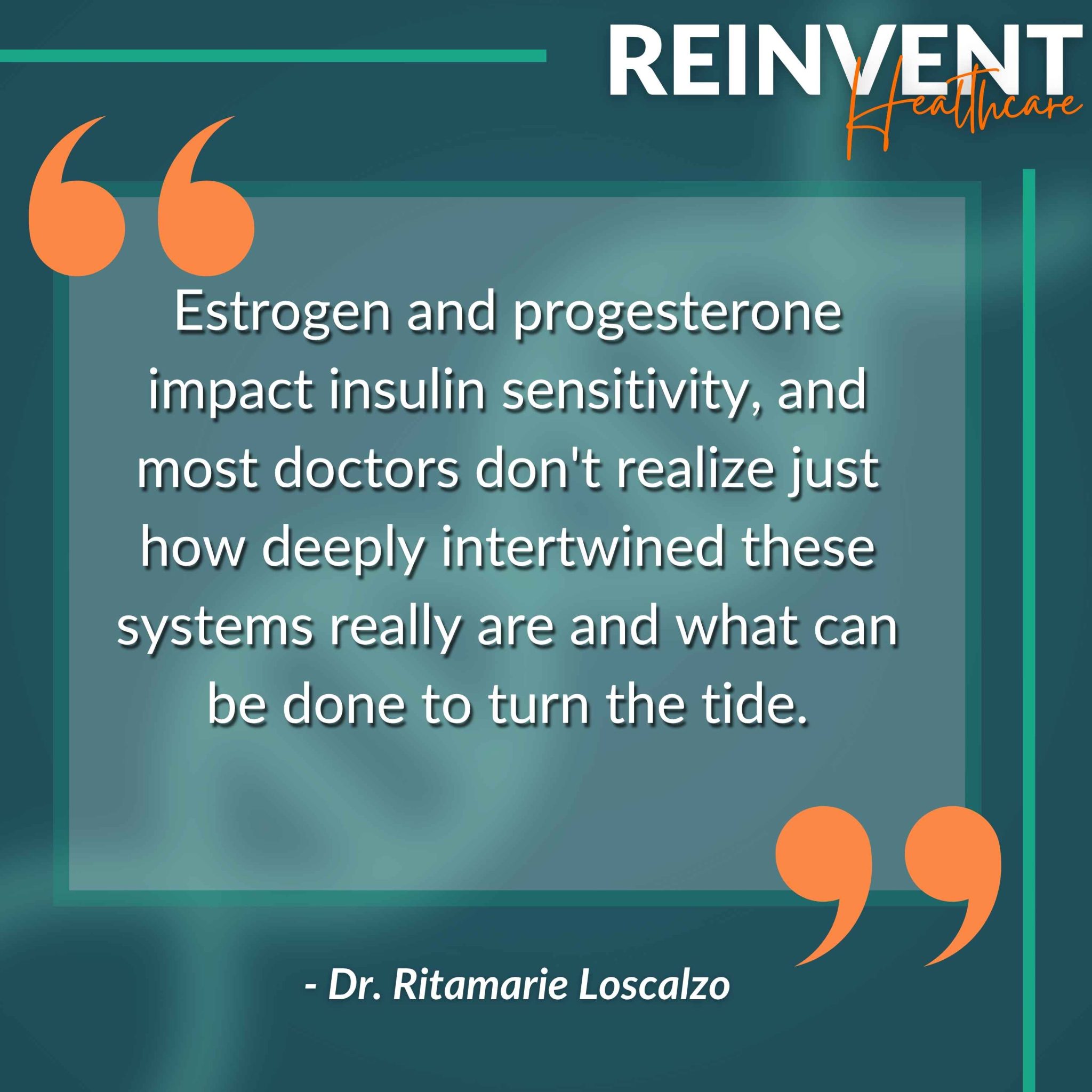
So today we're diving into the science behind how estrogen and progesterone impact insulin sensitivity, especially during perimenopause and menopause. Most women, and quite frankly, most doctors, don't realize just how deeply intertwined these systems really are and what can be done with food, herbs, and lifestyle to turn the tide.
So what happens to estrogen and progesterone at menopause? Let's start with the basics.
During perimenopause and menopause, both estrogen and progesterone decline, but not evenly. Progesterone often drops first and more dramatically than estrogen due to fewer ovulations. Estrogen declines more gradually, but fluctuates wildly before bottoming out. And this hormonal roller coaster doesn't just affect mood, sleep, and hot flashes. It directly affects how the body handles glucose and insulin.
Estrogen plays a crucial role in metabolic health, and most people don't realize that. Estrogen helps move glucose into muscle cells by enhancing the activation or the action of an insulin-sensitive receptor, the glucose transporter, GLUT4. It also inhibits TNF-alpha and IL-6, which are inflammatory cytokines linked to insulin resistance. Plus, it improves mitochondrial function, which is essential for fat burning and energy regulation.
All of these combined cause a problem when estrogen drops. Insulin sensitivity drops as well, especially in the muscle and liver cells. That's why postmenopausal women often experience elevated fasting glucose and increased visceral fat, fat around the midline, and higher risk of metabolic syndrome and type 2 diabetes.
Even though estrogen gets more attention, progesterone is equally critical to address. It balances cortisol, which when upregulated raises blood sugar and contributes to insulin resistance. So they work in combination with each other. Progesterone supports beta cell function in the pancreas, that's the cells that produce insulin, and it reduces inflammation.
Dr Ritamarie (04:54.237)
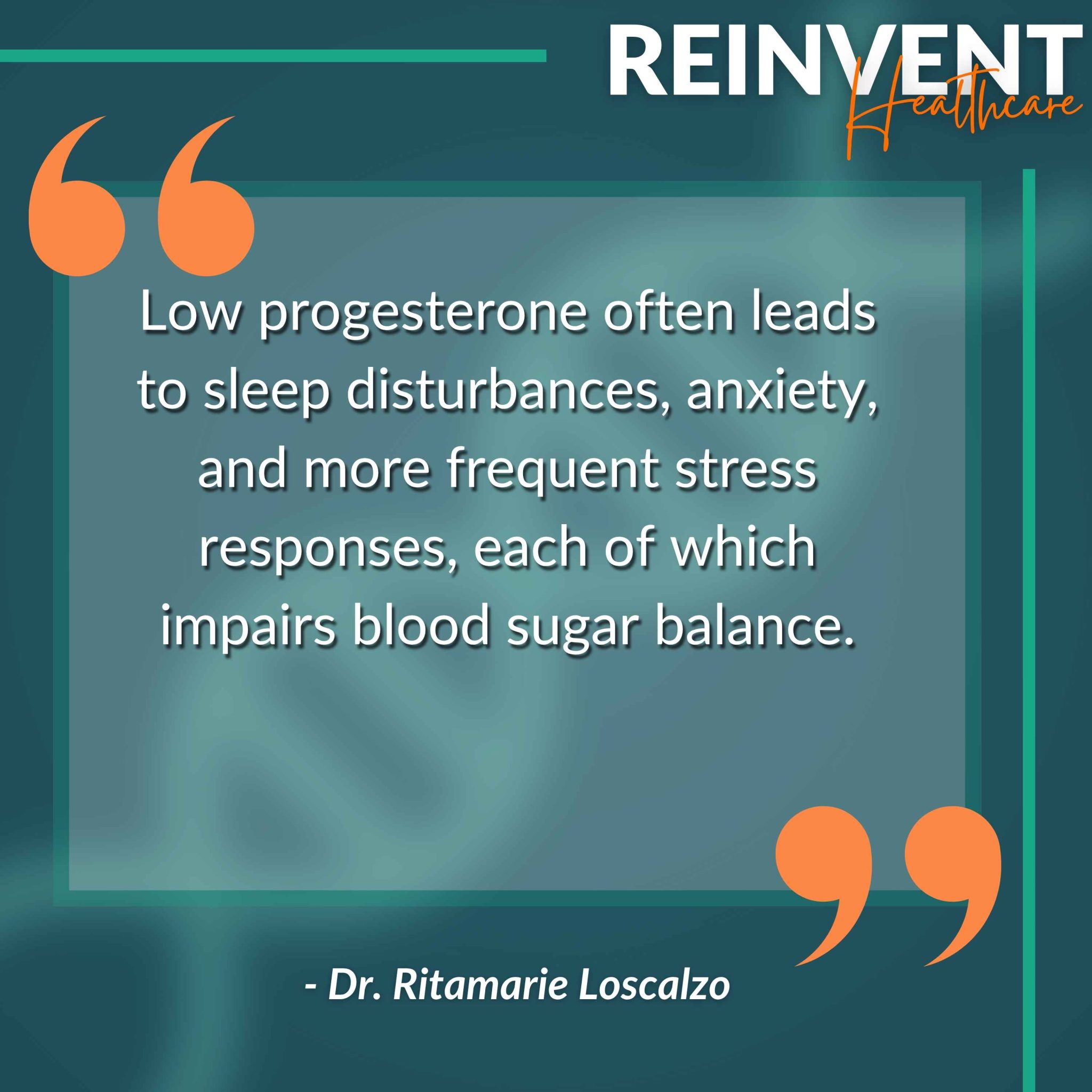
Low progesterone often leads to sleep disturbances, anxiety, and more frequent stress responses, each of which impairs blood sugar balance.
There are many foods that support hormone and metabolic balance. A plant-based, low-glycemic diet can profoundly support this transition. Flax seeds can help, because they're rich in lignans. Lignans modulate estrogen receptor activity and help reduce hot flashes and promote estrogen detox.
Cruciferous vegetables like broccoli, kale, cabbage, Brussels sprouts are important because they support phase I and II liver detoxification. Think about DIM, diindolylmethane, and I3C, indole 3-carbinol. They reduce estrogen dominance symptoms.
Dr Ritamarie (04:07)
Legumes, especially lentils, can have a positive effect, because they contain phytoestrogens in the form of isoflavones that mimic weak estrogens and buffer low levels. And they're high in fiber, and they can stabilize blood sugar. But I do recommend that you test to make sure that the carbohydrates in the lentils don't shoot up the blood sugar, because it can in very sensitive people. Again, remember, it's all about personalization.
Dark leafy greens are powerful and should be included regularly in the diet, especially around menopause. They're loaded with magnesium and folate and calcium and all these nutrients that are critical for hormone pathways.
Berries and citrus can be helpful as long as they don't contribute to blood sugar elevations in sensitive people, as measured by a glucometer or a CGM. They're high in antioxidants, which reduce inflammation and oxidative stress, and that's all tied to insulin resistance.
So these foods don't just balance the hormones, they don't just balance the blood sugar, they even lower glycemic impact and improve the insulin sensitivity of the cells.
So how do we support hormone balance with herbal and nutrient support? Well, some of the most studied herbs are Vitex, which is also called chaste tree berry, and it helps stimulate luteinizing hormone and promote natural progesterone production and support the hypothalamic pituitary ovarian axis.
Black cohosh, well known in menopause, is an herb that acts on estrogen receptors to relieve menopausal symptoms and may help restore insulin sensitivity in estrogen deficient people. So I've used black cohosh very significantly and had some people respond amazingly and within days their hot flashes decrease and others don't respond at all. So again, it's personalization,
finding what works for the person based on the mechanisms at action.
Cinnamon is tried and true for blood sugar levels and insulin sensitivity, and that can be used at this point in time. As is berberine, it's known for blood sugar support because it activates AMPK, the body's metabolic master switch, and it improves insulin sensitivity. It also helps with gut microbiome and helps reduce lipid level and restore sensitivity of the cells.
Adaptogens like ashwagandha and maca might help modulate cortisol and reduce stress-induced insulin resistance. Plus, they support thyroid and adrenal function, which are indirectly linked to glucose balance. The best way to determine the appropriate use and course of action to guide food and lifestyle supplementation so it's individualized is testing. And you can do that with precision when you can test.
So of course, you want to test fasting insulin and glucose and calculate what's called the HOMA IR score. You want to look at postprandial glucose, which requires a glucometer or a CGM. Looking at salivary hormones or the DUTCH test to assess diurnal patterns of estrogen, progesterone, and cortisol, and also with the DUTCH test to look at metabolites and kind of know what's going on in the system and the appropriateness of interventions and the effectiveness of interventions.
Highly sensitive C-reactive protein, hemoglobin A1C, and other markers of inflammation are really important to test, because when that's high, we get a lack of control of glucose when there's a lot of inflammation.
And finally, is a test that I rarely if ever do, but it's something to include for completeness, fasting in leptin. Testing leptin can give us a sense of how well a person's feeling satiated after a meal, which controls their appetite and their choice of foods, which can affect this whole progesterone-estrogen-insulin interaction. I don't do it that often just because I can usually detect based on symptoms and presentation in other labs whether or not I feel like whether there's leptin resistance, but sometimes it's important to test. So I include it for completeness.
So menopause is not a metabolic death sentence. It's a hormonal pivot point. When you have the right tools, when you implore the right tools, when you do testing and incorporate plant-based foods and herbal supplementation, you can support insulin sensitivity, rebalance the hormones and reclaim energy. And that's what it's all about, right? Having that feeling of well-being going into menopause and perimenopause and menopause and postmenopause and feeling better than ever rather than worse than ever, which a lot of women experience.
We, as the health practitioners who look at the full picture, who look at functional nutrition, who look at root cause analysis, we're the future of healthcare. We're dedicated to putting care back into the word healthcare. So it's no longer just a symptom management, disease management
type of approach. And with the right supplements, with the right diet, with the right interventions, the right testing, we can help people at this pivotal point in life. At this point they're going from being a person who can reproduce and take care of others to a woman who can step into her power.
So it's really important that we allow this transition to be what it's meant to be as a woman stepping into a more powerful phase of her life, feeling comfortable and having good blood sugar control and reducing the oftentimes fatal results of the risks of insulin resistance, diabetes, which leads to cardiovascular risk.
So hormonal shifts in midlife are not a flaw in design. They're a call to rebalance, to nourish, and to tune in more deeply to the body's signals. I've been dedicating my life to empowering individuals to take charge of their health and to mentoring practitioners who want to make a real difference by using food, lifestyle, and functional insights to transform lives.
So if you're ready to take your practice to the next level, visit inemethod.com and learn about some of the ways that we can support you there with education and mentorship and head over to the show notes where I have links to powerful tools and additional trainings and to the resources and references if you want to go deeper.
Together let's continue the movement to reinvent healthcare. And until next time, shine on.
Listen on your favorite podcast platform!





Share This Episode