Beyond Calcium: The Nutrition Bone Really Needs
Many people are taking calcium, vitamin D, and other bone-supportive supplements, yet their bone density continues to decline.
What are we missing?
Bone is not just a calcium storage site. It is living tissue that depends on a complex network of nutrients, signals, and systems working together. Protein, amino acids, muscle, gut health, hormones, blood sugar balance, and nutrient absorption all influence whether the body has what it needs to rebuild.
In this episode of ReInvent Healthcare, Dr. Ritamarie explores why a root-cause approach to bone health requires us to look beyond calcium and understand what is truly driving bone loss.
You’ll discover why adding more supplements may not be the answer and why the better question is:
What does this person’s body need in order to rebuild stronger, healthier bones?
What’s Inside This Episode?
- Why bone is a living collagen matrix, not simply a place where calcium is stored
- Why calcium matters, but calcium alone is not a complete bone health strategy
- How protein, amino acids, and muscle influence the signals that support bone remodeling
- Why poor digestion and nutrient absorption can undermine even the best bone-supportive plan
- How blood sugar balance and glycation affect collagen quality and bone resilience
- The key nutrients beyond calcium and vitamin D that support the bone matrix
- Why plant-based diets can support bone health, but only when they are properly designed and nutrient sufficient
- How practitioners can move beyond generic bone protocols and identify what each person needs to rebuild
If you support people experiencing osteopenia, osteoporosis, fractures, menopause-related bone loss, sarcopenia, digestive challenges, insulin resistance, or metabolic dysfunction, this episode will help you see bone health through a deeper root-cause lens.
Resources and Links:
- Download the full transcript here
- Download our Free Guide to Complete Proteins Chart.
- Download our FREE Beyond Protocols Guide here.
- Download our FREE Metabolic Health Guide here.
- Join the Next-Level Health Practitioner Facebook group here for free resources and community support
- Reserve your spot for ReInvent Healthcare 2026 here to deepen your clinical skills, connect the dots between complex health patterns, and learn root-cause strategies you can apply with the people you support.
- Visit INEMethod.com for advanced health practitioner training and tools to elevate your clinical skills and grow your practice by getting life-changing results.
- Check out other podcast episodes here
Transcript
Dr Ritamarie
What if a person is taking calcium and vitamin D, maybe even K2, magnesium, and they're still losing bone? What if they're doing all the bone supplements and the specialty formulas, but their DXA is still declining? And what if they're eating what they think is a healthy diet, but they're not getting enough protein, leucine, not absorbing minerals, not building muscle, or not giving the collagen matrix what it needs?
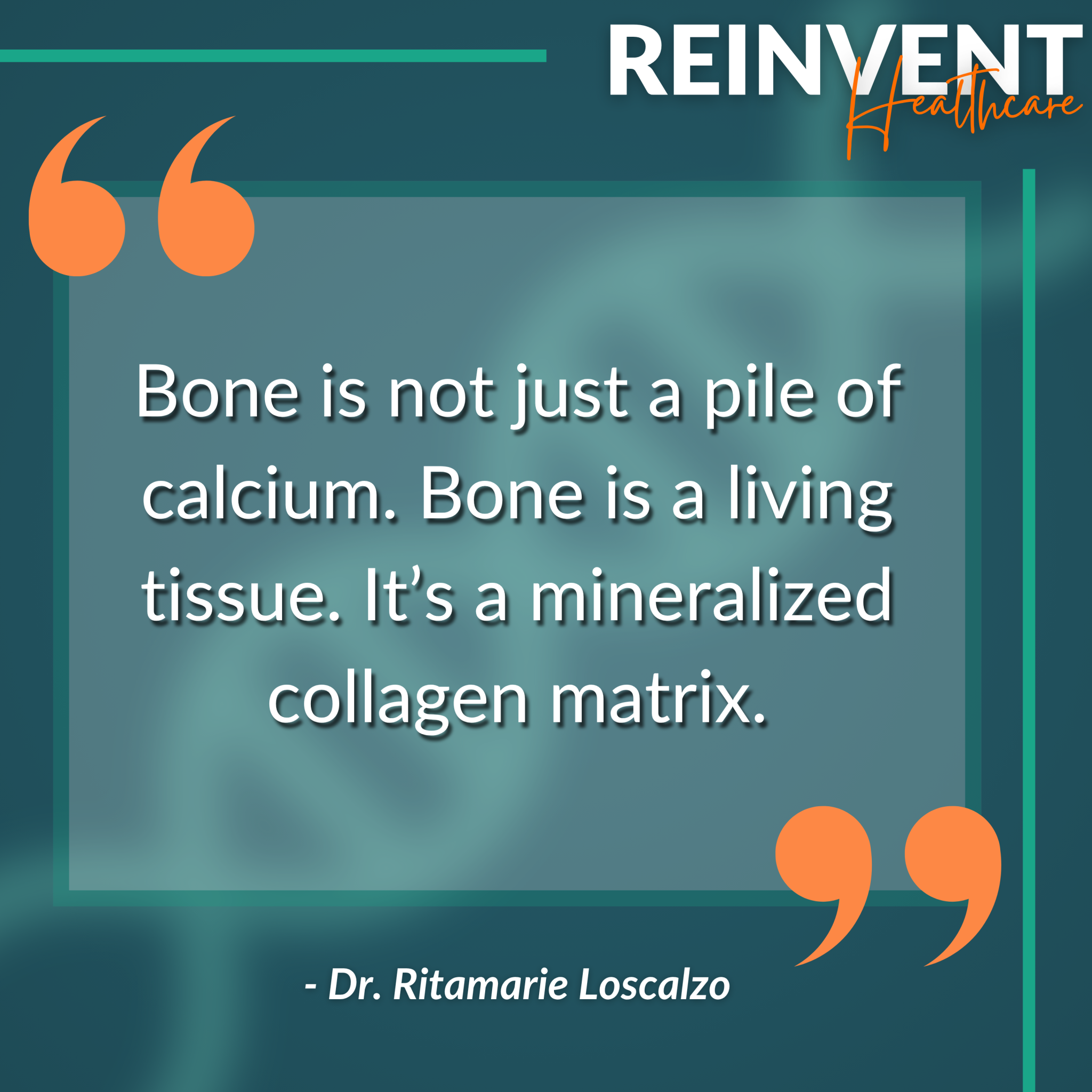
Here's the part that gets missed in so many bone health conversations, and this is what we're going to talk about today. Bone is not just a pile of calcium. Bone is a living tissue. It's a mineralized collagen matrix.
Bone needs minerals, of course, but it also needs protein and amino acids and vitamin C, magnesium, which is a mineral, and vitamin D and vitamin K, and then zinc and copper, manganese, boron, silica, those are all minerals. It's not just about calcium.
Plus they need adequate energy and a healthy gut that can absorb all the nutrients that they're taking in. Bone needs stable blood sugar to protect the collagen quality and muscle to yank and pull on the bone and hormones to regulate remodeling. All these things are necessary. It needs enough nourishment for the body to feel safe to rebuild. Undereating is not good.
Today we're going to go beyond calcium, because calcium matters and vitamin D matters, but if that's where the bone conversation stops, we're not practicing root-cause bone care.
In previous episodes, we talked about the endocrine side of osteoporosis and the hidden hormone signals behind bone loss. We talked about movement signals that build bone, including resistance training and impact and jumping and weighted vests, yoga balance, and testing bone turnover markers.
Today, we're going to look at the nutrition side of the bone story. It's not the usual “Take calcium and vitamin D” and be done or “Add K2 to it,” because that's important. We're going to talk more about bone in a deeper level. We're going to look at the living matrix of bone. We're going to look at the muscle-related tissue, mineral-dependent tissue, gut-dependent tissue, and metabolic responsive tissue.
If you work with people who have osteopenia, osteoporosis fractures, menopause-related bone loss, sarcopenia, digestive issues, insulin resistance, or even restricted eating patterns, not just anorexia or bulimia, but restrictive eating patterns. Patterns, which is very common right now and sometimes medically induced with the medications on the market. This episode is for you.
Specifically, we're going to be talking about why bone nutrition is not just calcium. Bone nutrition is about nutrition that supports the bone matrix, the mineral balance, the muscles, the hormones, the gut, and metabolic health, nutrition for all of that.
When we, as practitioners, understand that, the whole conversation actually changes, because instead of asking only, “How much calcium is this person taking?” We start asking better questions like are they eating enough protein? Are they digesting enough protein? Are they getting enough leucine to support muscle protein synthesis? Are they digesting and absorbing not just the protein but all the minerals, as well? Are they underfueled or overfasting? That's common these days. Are they inflamed? That’s very, very common. Are they insulin resistant? 93% of the population is.
Are they low in magnesium? Almost everybody I see is. Are they getting enough vitamin D, and is it actually being activated and utilized? Think kidney and liver for both of those. Do they have enough vitamin K, and is it the right form of vitamin K? What about zinc and copper and manganese and boron and silica and vitamin C? We don't think of those when we think bone. We kind of start thinking calcium and vitamin D and K.
What about their gut? How's their gut doing? Is it supporting proper digestion, proper breakdown, proper stomach acid to break down the protein and the minerals? Is the gut lining inflamed? Are we having some absorption issues? Do they have celiac? Very common in celiac, especially untreated celiac for a long time, is to have osteoporosis. Do they have gluten sensitivity that's non-celiac but still is important and very much detrimental?
Do they have low stomach acid? A lot of people are thinking they have high stomach acid and treating it with proton pump inhibitors and Pepcid AD and all this sort of stuff.
Do they have pancreatic insufficiency or gallbladder issues? These are things that we have to look at when we're looking at somebody's risk for bone disorders and also somebody who already has them.
What about dysbiosis? All of these things get in the way of the nutrient absorption and digestion and utilization. These are really good and a bone protocol that ignores these questions isn't going to be complete.
We need to start with an all too common scenario. Someone gets a DXA scan and they get the bad news that they have either osteopenia or osteoporosis. Osteopenia isn't a disease, it's a state of lower mineral mass in the bones, not necessarily a disease. Osteoporosis is considered a disease.
They're told to take calcium, vitamin D, and to do some weight-bearing exercise, and so they do, and they start walking more. These things do matter, but there's so much more to consider. Medication may be necessary for some people, depending on the state of their bones and their fracture risk. I don't want us to, as functional practitioners, just throw away the idea that medications can't help, but medications given in lieu of proper understanding, proper nutrition, proper movement patterns to help restore and rebuild bone. Those recommendations that I just mentioned, the vitamin D and the calcium and movement, those are great, but they're not complete. It's too narrow.
We don't want to treat the bones like mineral storage tissue when it's actually a living, remodeling tissue that depends on a much broader network.
Bone is a metabolically active tissue, and when you look at it through functional healthcare and nutritional endocrinology lenses, we start to see that nutrition for bone is way beyond what we thought.
Let's start with the structure. Bone contains minerals, especially calcium and phosphorus, but bone isn't just minerals. It's built on an organic matrix that's primarily something that gets a lot of attention these days. It is collagen.
Dr Ritamarie (07:18)
Collagen matrix gives the bone not just strength but flexibility and tensile strength. The minerals are then deposited into that matrix and that gives the bone the hardness and the compressive strength. If we only think about minerals, we miss the matrix, and DXAs don't measure the matrix. They measure the strength of the bone, so we miss a large part of that.
Fracture risk isn't just about bone density, it's about bone quality, and that's what the DXA misses out on, too. It includes the microarchitecture, the collagen quality, mineralization, and the turnover of those minerals and micro damage that happens, inflammation, and glycation, which comes from metabolic health and insulin resistance.
When we talk about nutrition for the bone, I like to ask a lot more than are they getting enough calcium? I ask things like do they have the protein and amino acids needed to build the matrix? Do they have enough vitamin C to support collagen formation?
Do they have enough copper for collagen cross-linking? That’s super important. Do they have enough zinc and manganese for enzyme systems involved in the matrix repair? Everything in the body gets damaged and then repaired, damaged and then repaired. Bone is no different. Do they have enough magnesium for the mineral metabolism for muscle relaxation and vitamin D physiology? Do they have enough calories? This is so important these days for rebuilding, and so many people have tried for years and years to drop the extra weight. What they do is they just stop eating enough. A lot of these little GLP medications and others are making a person more full more quickly, and they don't eat enough. When they don't focus on a nutrient-dense diet, they're not going to get enough of the nutrients they need. They're just going to keep eating the low nutrient-dense foods, and they're going to start to lose some of that.
What about stable blood sugar? We need stable blood sugar, and people forget about this, and enough muscle signaling to tell the bone that the matrix is needed, but you also need to prevent glycation. If the collagen matrix is weak or inflamed or glycated or undernourished, just adding more minerals is not a complete bone strategy. This is one of the most important perspective shifts we as health practitioners need to make.
Bone isn't just a calcium container. You'll hear me say that over and over. It's a living matrix. You'll hear me say that over and over. I just want that to sink in.
Let's talk a little bit about protein. It's usually underemphasized in the bone conversations. It's essential for bone health. It supports the collagen matrix, but also the muscles and the strength of the bones themselves and the repair and the immune function and enzymes and transporters and hormones and all of these are essential for healthy bone.
Protein also supports the muscle bone axis, and we know how important this is. Bone and muscle work as a unit. Low protein can contribute to low muscle mass. Low muscle mass means less mechanical load and pulling on the bone, and that leads to lower strength and a higher fall risk.
Low muscle means poor glucose disposal, because we know that trained muscles utilize the glucose. They allow the insulin to get into the cells, lowering the blood sugar, which lowers the glycation risk and helps us to avoid the risks of high blood glucose. We need all that in order to be healthy in the bone department.
When somebody has osteopenia or osteoporosis, especially someone who's a lean postmenopausal woman or a chronic dieter or someone who fasts a lot or has digestive issues, protein status needs to be addressed, and it's really important. That doesn't mean everybody needs a high protein diet. We have to take into account the person's age and their muscle mass, their activity level, their digestion, their kidney status, kidney status is a biggie, their healing needs and goals. Everybody needs a little bit different amount of protein, and it's not enough to say everybody needs a hundred grams of protein a day. Some people need more.
A lot need less, and we need to calculate, because the dangers of too much protein are clear, especially in people with impaired kidney function. That often happens when people have poor metabolic health, and they don't have the right amount of glucose getting into the cells, because they're insulin resistant.
A lot of older adults who usually get osteoporosis, although it's not just restricted there, the amount of protein that's needed to preserve muscle and function may actually be higher than what we're needing. There's a formula, and the RDA is like 0.8 grams of protein per kilo of body weight, which means that somebody who weighs 100 pounds, divide that by 2.2, they actually weigh somewhere in the neighborhood in the 40s, and if we go 0.8, we're looking at protein intake in the 30s.
That's going to be too low for someone who has some sort of imbalance. That's going to be too low for someone who's older, even if they're sedentary. It's definitely way too low for someone who's active and lifting, which most people should be in order to prevent bone loss.
We have to look at not just is the person eating a healthy diet, but are they eating enough usable protein to maintain muscle and bone matrix? This is critical, and it's not just “Everybody needs this much. Everybody needs 0.8.” No, a lot of people need more.
“Everybody needs a hundred grams a day.” I heard that said on an audiobook that I was listening to. Every woman, every postmenopausal woman, needs a hundred. What about the four foot eleven person? What about the five foot four or six foot four basketball player or weightlifter? Those have very different needs, and we can't treat everybody the same.
Dr Ritamarie (13:07)
Let's look at leucine, which is one of the amino acids that's important for protein synthesis. Leucine is one of the branch chain amino acids, and it plays a super role in stimulating muscle protein synthesis. We need good muscle for good bones. We've talked about that in other episodes. This is important, because when the skeletal muscles pull on the bone, that's the main source of skeletal loading and for the bone to respond in such a way that says, I need to get stronger. The body responds to these stressors in ways that say, I need to get stronger.
When people start to lose muscle, they often lose strength, and they lose balance. They're not able to balance well, they lose metabolic resilience, and they lose the ability to create meaningful mechanical signals for bone.
It's really important that we have enough leucine. It's not a direct bone supplement in the way people think about calcium or vitamin D. It's an important muscle supplement, and muscle is important for bones, so the muscle-bone connection is important. It's especially important in older adults, because anabolic resistance can increase with age, and that means that the same amount of protein may not stimulate muscle protein synthesis as effectively as it might have in earlier life.
Older people may need more intentional protein calculation, better amino acid density, and a clear plan for resistance training. When somebody's on a plant-based diet, leucine needs to be looked at, and there's plenty of good plant-based sources. We just have to make sure that we're guiding our clients to get them on a regular basis. That doesn't mean that plant-based diets can't support bone. They totally can, totally can. They do, but they need to be designed intelligently.
Quite frankly, all diets need to be designed intelligently. It's not like you get a free ride. You go, well, I'm not vegetarian, and I'm not plant-based, so I just get to eat whatever I want. No, most of the food people eat is highly processed and devoid of nutrition. Everybody needs to pay attention, and in the case of plant based, we just have to make sure that we're getting enough of those foods that have leucine. I have a chart that labels all that, and if you check the show notes, I'll leave a link for how you can get access to that chart.
Plant-based protein sources may include the common ones, tofu, tempeh and edamame, and I had an interesting conversation with somebody today about soy as a great protein source, but there's non-soy tofu, fava bean tofu, which is actually more protein-dense than soy, so don't think you have to have soy.
If you're scared of soy, because of the estrogenic effects, which may be overrated, but that's a story for another day. If you're scared about soy, or you're allergic to soy, it is one of the top six allergens, then there are the sources of tempeh and tofu that are dense. They're dense sources. Lupini beans are another one that's a great source of protein. Lentils are a good source of protein in other beans if people tolerate them.
Hemp seeds are a great source of protein. Pumpkin seeds are a decent source. Chia seeds are decent. Almonds also have calcium, so they're a decent source. Sesame seeds and tahini. Things like protein powders, as needed. Pumpkin protein, pea protein, fava bean protein. There's all kinds of protein powders that don't have a whole bunch of junk added to them.
There's no problem with supplementing with these things, especially in the case where someone has low bone density, and we're trying to get sources of clean sources of protein.
This is where, as practitioners, we need to really be conscious of personalizing the diet to the person, to their religious beliefs, to their preferences, to their current state, to their gut state, IBS, SIBO, significant bloating. They may not tolerate legumes, they may not tolerate certain protein powders.
Someone with histamine issues may not tolerate fermented soy or any kind of fermented products, so we just have to really look at each individual and help them to design a diet that works for them.
Someone with kidney disease needs individualized guidance, because that's where that 0.8, depending on the stage of kidney disease. Working with somebody who understands that and knows how to help them is really important, because if you tell somebody who has advanced kidney disease they have stage two or three or four kidney disease, holy cow, if you tell them to eat 100 to 150 grams of protein a day, they're going to get in trouble. They're going to get in trouble, you're going to see their eGFR going down. Those are things that are important.
People with insulin resistance need to be careful about protein sources that have a lot of starch and getting a CGM and monitoring is super, super important.
People with a poor appetite or poor stomach capacity may need more blended foods, where you make blended soups with lots of vegetables and and some nuts, seeds, et cetera, blended so that it doesn't fill them so much, and they get the calories they need. That's a hard one with poor appetite or high metabolic rate, and they're losing weight. We don't want to just give people a food list. This is bone supportive nutrients.
Foods need to be customized to the point. We have to make sure that the person's getting enough amino acids to preserve muscle and build the bone matrix, and one of the ways I like to do it is to have people keep track of their food for three or four days. We put it into a software, something like chronometer, that's one of my favorites, but there's others. We put that in, and we look to see not just how much total protein and carb and how much of the minerals and vitamins you're getting, but how much of the various amino acids.
That's one of the reasons I like that chronometer app, because it gives you all the amino acids, and you can see how much leucine they're getting.
I want to come back to calcium, because I didn't mean to dis calcium. Calcium is super important, absolutely, but it's not the most important thing. A lot of people are focusing just on calcium. Of course, bone is a major calcium reservoir in the body, and it's essential for the muscle structure and muscle contraction and skeletal structure and nerve signaling and blood clotting and lots and lots and lots of other functions. But, there's several problems with how calcium is often discussed.
First serum calcium, when we measure serum calcium, it doesn't mean anything about bone. It really doesn't. That's highly, tightly regulated, because it's important for muscle contraction, and guess what's a muscle? Our heart.
We have to make sure that that's in place, but there are ways to look at the numbers, and we'll do that in another episode and talk about how to look at the numbers, but calcium in the blood is not a measure of how strong that is.
Dr Ritamarie (19:54)
The bottom line is serum calcium is not a good indicator, because it's so tightly regulated, and it will not just start to plummet down as the calcium reserves go down, because the body will naturally try to keep the pH of the blood within that 7.35 to 7.45 range. The way it does that when it starts to dip is to pull the alkaline minerals from the bone, and calcium doesn't work alone. We have to look at it in the context of vitamin D, in the context of parathyroid hormone, and then looking at magnesium and phosphorus and kidney function and protein intake and all these things like gut absorption, medications that interfere, and just overall diet.
We have to look at it in conjunction with the rest of it.
Third, more is not better. Excess calcium supplementation without the right context might not be appropriate without the right amount of magnesium, for example. Food-based calcium is often overlooked. There's so much calcium in a lot of plant foods that people poo-poo and don't count, and they don't count them as protein sources either, and they have good calcium in there.
We have some green leafy vegetables and broccoli and kohlrabi and things like that. There are low oxalate greens for people who are sensitive to oxalates, but also oxalates will yank out some of the calcium. You can look at spinach and think, wow, it's a great source of calcium, but it has a lot of oxalates, which may bind some of that and take it out, so it's not as good as it looks.
You can look at things like kale and bok choy and all those and collared greens, and I don't know what else. There's a bunch of them. Turnip greens and other things like sesame seeds. I love tahini, and one of my favorite ways to eat tahini is poured over some seaweed. There's a particular seaweed that I love called Monostroma nitidum. Look it up. It’s really good for breaking down arterial plaques. That with calcium, hmm, that's a good thing. Good thing for my arteries and good thing for my bones.
Then there's calcium often used to set tofu, so tofu can also be a high source of not just protein, but of calcium. We need to teach people that there's nuance to the food, and the nuance is also about their biochemistry and sometimes their genetics.
While spinach and beet greens are great sources of calcium, they're so high in oxalates that the calcium absorption gets reduced, so let's not just look at it on paper, let's look at bioavailability.
The whole meal matters. What else is in the meal? What is happening in the gut? What is the microbiome doing? We have to look at the whole takeaway. While calcium is important, and we have to have enough of it dietarily or supplementation-wise, it's not enough for the whole bone health.
Dr Ritamarie (22:31)
Let's look at how the nutrient network for bone health extends way beyond calcium supplementation. Vitamin D. It's essential for calcium absorption. When we don't have enough vitamin D, we may not be absorbing the vitamin, and that's all controlled with the parathyroid hormones. We have to look at that, those numbers, as well. Vitamin D is also important for muscle function and mineral metabolism, but it doesn't work in isolation, and here's the thing most people don't know about magnesium: it's required for adequate vitamin D metabolism, and it also supports parathyroid.
Parathyroid are those little four glands around the thyroid that control vitamin D absorption and calcium absorption. We have to look at those, as well. Magnesium is also important for insulin sensitivity, and we talked about how glycation can affect the collagen matrix. Magnesium's super, super important for bone health.
When we look at somebody who is taking vitamin D, and it's not responding like we expect, there are a couple of things I look at. I look at their genes to see if they have genetic SNPs that prevent that.
I also want to look at whether they have signs of magnesium deficiency. Do they have muscle cramps or insulin resistance, which is magnesium dependent? Are they under a lot of stress, which is lowering it. Do they have low red blood cell magnesium, if that's been tested? Thinking about magnesium when the vitamin D isn't responding to taking high dose is super important. All these nutrients work in conjunction. It's like a nice concert. We have to do it in the right way.
And even though K2 is discussed in relation to calcium and so that the calcium lands in the bones and not in the arteries and not in the joints, we have to make sure that person's getting adequate K2 in addition to the D. It just determines where the calcium lands.
I also think it's not a good idea to simplify it down to K2 gets calcium in the bones and keeps it out of the arteries. It's not that way. It's a little bit more complicated than that. Yes, you can simplify it down to that, but what it really does is K2 supports the activation of certain vitamin K-dependent proteins, including osteocalcin, and that's an important one in the bone and matrix. It's really important.
These proteins in the blood vessels and in the soft tissues are really important and help regulate calcium handling, but they don't work alone. They depend on adequate vitamin D, magnesium, protein, and mineral balance. We talked about copper and zinc and all that, kidney function, inflammation, hormone signaling, and overall remodeling. There's so much interaction.
It's not enough to just take a certain number of nutrients. Take these five nutrients, and your bones are going to be strong. A lot of people are doing that and expecting that, and a lot of doctors are teaching that. It's a short-lived plan.
K2, yes, needs to be part of a supportive bone plan, but it's not alone, it's not a standalone that will guarantee the calcium will go where it needs to go.
Boron. Boron's another one that influences calcium, magnesium, vitamin D, steroid hormone production, and it helps to support how our bodies use minerals. It appears to play a role in the way vitamin D and the other hormones interact with bone remodeling. Boron is interesting, because it influences inflammatory signaling and oxidative stress. Those are both relevant to bone turnover. While boron is not usually the first nutrient people think about for bone health, it's super important, and low intake can quietly weaken the broader mineral and hormone environment that the bones depend on.
Silica, we hear a lot about silica for hair and nails. It supports connective tissue and matrix integrity. That's important for bone, because bone isn't just mineral, it's a mineralized matrix. Silica is involved in the connective tissue structure and crosslinking and may support collagen formation and where the minerals are deposited. We talk about silica, we're not talking about it as a bone density supplement by itself. We're talking about it as part of a tissue quality conversation.
It's important for collagen and matrix and connective tissue resilience, as well as the structure that helps the bone become strong by providing the matrix for the minerals to land on.
Then zinc. Zinc's another important bone mineral, and it supports bone formation and immune function and many different enzymes in the body. It's involved in osteoblast activity. Osteoblast build bone and collagen formation and tissue repair and immune regulation.
These are all important things that we need it for, and it matters, because when we have chronic inflammation, the bone remodeling balance goes more towards breakdown. We need the zinc to keep it into build mode, part of the repair and immune network that keeps a healthy bone remodeling environment rather than a breakdown environment.
Copper supports collagen crosslinking. It's important, because of the importance of collagen in the structural framework of the matrix of the bone. It's needed for the enzymes that help with the cross-linking of collagen and elastin, and it gives connective tissue strength and resilience. When we have too little copper, it affects the quality of the bone matrix.
Manganese supports connective tissue and antioxidant enzyme systems, and it's involved when the body needs cartilage and when we have injuries and sprains and strains. Manganese is an important nutrient to be thinking about to help people to rebuild the connective tissue and the bone matrix. It supports a manganese-dependent enzyme called superoxide dismutase, which is a very potent antioxidant. I see a lot of people with genetic imbalances in this SOD, so in this particular case, we need to look at that as part of a tendency towards weaker bones.
Oxidative stress affects osteoblast function. When we have oxidative stress because the SOD is low and because we don't have enough manganese, we can get more inflammation and overall affect the remodeling down towards breakdown versus building.
Vitamin C is a really important nutrient for collagen synthesis. When we don't have enough vitamin C, the body can't properly build and stabilize collagen. Since bone is built on a collagen matrix, C becomes foundational for bone quality. We don't hear that a lot in people talking about bone nutrition. That's why colorful plant fruits, greens, and berries and citrus and kiwi and sprouts and red bell peppers and all these things are valuable in a bone supportive diet.
Let's move to phosphorus. Phosphorus gets a bad rap, because it can get high in kidney malfunction, and it can damage the kidney. It's a major mineral, but it's rare to have a deficiency, and it's usually in excess, because it's high in soft drinks, and it's high in meats, and it's high in a lot of things.
When we have more phosphorus in ratio to calcium, we get more bone breakdown. Unlike magnesium or vitamin D, phosphorus is usually very plentiful, especially in processed diets, which a lot of people do.
The key is balance. Too little can impair mineralization, obviously, but too much, which is more common, is going to disrupt the calcium parathyroid vitamin D regulation in some people.
The big message is this: minerals work in networks, they work in families, they work together. When bone supportive nutrition recommendations isolate calcium from those other nutrients, the magnesium, vitamin D, K2, parathyroid hormone, kidney function, protein, collagen, digestion, they miss the physiology, and they miss the ability to really support people in building their bones.
Bone nutrition is not about megadosing one nutrient. It's about restoring the whole network.
Let's talk about the importance of the gut in bone nutrition. You can recommend all the bone nutrition you want and still fail if someone can't digest, absorb, and assimilate them.
If somebody has low stomach acid, they're not going to be able to pull the amino acids out of the protein. They won't be able to extract the minerals from their carriers. Those are super important things. They may be taking all these great nutrients, but they're not getting them in.
You probably see this as much as I do. They're taking protein powder and all these nutrients and a multivitamin, but without the right stomach acid and without the right enzymes and if they're on a PPIs all the time, protein pump inhibitors, if they have celiac or gluten sensitivity or inflammatory bowel disease, they're not going to get those nutrients into the system.
We have to look at gut and metabolic, to me, are the two key cornerstones that if we don't address it as part of a bone health protocol, we're not going to get people the results they need. So we have to look at that.
The fat-soluble nutrients that we talked about, vitamin D and K, they depend on proper digestive and bile function. If the gallbladder's been removed or the liver's not producing enough bile, all of these things, we need to get all these things together. Stomach acid for minerals and protein. Bile, liver and gallbladder function for your fat-soluble vitamins like A and D and K.
We didn't talk much about it, but A is important for membranes, mucous membranes. If the mucous membrane of the gut is impaired, because of vitamin A deficiency, we may not be getting what we want in terms of absorption.
The microbiome, we hear a lot about, can influence inflammation and immune signaling, but it can also influence mineral metabolism and hormone metabolism. If someone has bone loss, and they also have bloating and reflux, constipation, diarrhea, low appetite, any things that indicate that their gut isn't working properly or even unexplained weight loss, or they're on an overly restrictive diet, we need to think about absorption.
A bone protocol that ignores the gut, assumes the nutrients are getting in, and that's not always the case.
Dr Ritamarie (32:58)
When we're working with people who are quote unquote doing everything right, but continue to decline, we need to ask: are they eating the nutrients? Are they digesting the nutrients? Are they absorbing the nutrients? And are they able to, on a cellular level, utilize the nutrients that get in? Are the signals getting into the right place at the right time?
It’s a much more complete network than just looking at calcium and vitamin D.
Another important factor in building healthy and strong bones is blood sugar. I mentioned it a few times. I'm going to mention it a few more times. Bone is mineralized collagen. That's what it is. Collagen can be damaged by glycation, sugar coating. When the blood sugar is high, glucose can bind to proteins and form advanced glycation end products that stiffen and damage the tissues, including the collagen-rich tissues and the blood vessels.
In bone, this can affect the quality. One reason why people with diabetes have increased fracture risk, even when bone density doesn't always look severely reduced, is that they have glycation of the collagen. We need to look at this, and you can look at the A1C, you can look at their insulin levels, you can look at their blood sugar levels. The bone may look denser than expected, but the quality and resilience may still be compromised.
We, as practitioners, shouldn't assume that a normal or only mildly reduced T score means fracture risk is low if the person has insulin resistance, diabetes, neuropathy, inflammation, sarcopenia, or increased fall risk. Blood sugar matters. Insulin matters. Inflammation matters. Muscle matters, and collagen quality matters a lot.
When we talk about nutrition for bones, we have to talk about metabolic health.
Are their meals stabilizing their blood sugar? Are they getting enough protein and fiber? Are they getting too many carbohydrates that are shooting up their blood sugar and causing glycation? Are they undereating during the day and overeating at night? Common, common, common.
Are they overfasting and losing muscle? We see this a lot. Are they spiking their glucose repeatedly? Some people think that, well, it's natural after a meal for your glucose to spike.
No, it's natural for it to go up a little and come down and get back to baseline within two hours. We have to be looking at those things, and really learning how to master metabolic health is critical to being an effective functional practitioner or any kind of practitioner, quite frankly.
When people have poor low muscle mass, they're going to have poor glucose disposal, and bone nutrition, again, not just about mineral intake, not just about protein. It's a metabolic tissue.
The last thing I want to do before we close is talk a little bit about plant-based diets that get a bad rap when it comes to bone health. While it's true that a poorly designed plant-based diet can be very low in protein and minerals, which cannot get strong bones.
The truth of the matter is a well-designed plant-based diet can be wonderful for bone health, because in addition to building bone through good muscle, good protein, and good minerals, it's also creating a really great microbiome when we're eating enough of the phytonutrient-rich foods that feed and develop the short chain fatty acids that then feed the gut lining.
A good plant-based diet provides plenty of potassium and magnesium and vitamin C and lots and lots of polyphenols and antioxidants and fiber, anti-inflammatory compounds, like prebiotics and many minerals, and it supports a healthy microbiome.
As a result, it can support cardiometabolic health, and it can reduce inflammatory burden. Plant-based does not meet automatically being healthy or bone protective. A lot of people come in to see me, or they talk to me, and they go, “I've been plant-based for 20 years, and why am I falling apart?” Well, because there's quality. There's quality, and there's not quality.
Some plant-based diets may be low in leucine, and that's easy to look at a chart and get the right amount of leucine in the diet. Some are too low in calories. People go on the fruitarian type diets, they're not getting enough minerals or protein, they're not eating a lot of calories, and they're losing a lot of weight.
Some rely too heavily on grains and starches and not enough protein. A lot of them are relying on rice and quinoa and things like that. Some people avoid protein-rich foods and greens. Most plant-based diets are going to be low in B12 by design, unless supplemented unless you're eating the good bacteria out of the soil, which you can get a lot of B12 that way, but most people aren't.
Some people are low in zinc unless they pay attention to eating plant foods that are rich in it. Some are low in iodine unless they include adequate sea vegetables. This is true of a lot of diets. Most people who are just going to McDonald's or eating steak and mashed potatoes most nights with a little bit of broccoli on their plate, their diets aren't well designed, either. That's why I want to address this.
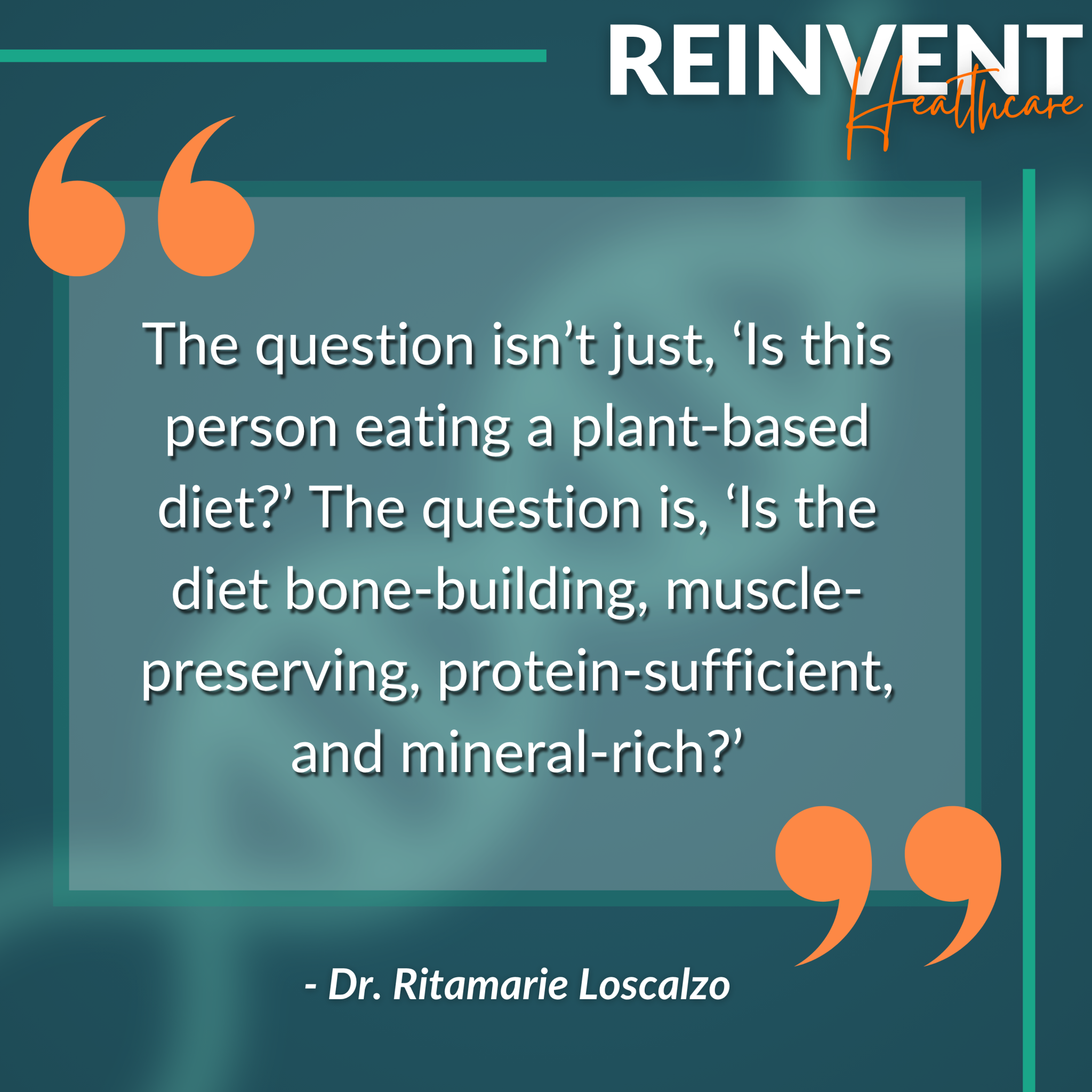
Any diet, whether it's plant-based or animal-based, can be too restrictive and can be missing key ingredients. We have to be careful and teach people how to design their diets to get the plethora of nutrition that they need. The question isn't just, is this person eating a plant-based diet? The question is, is the diet bone-building, muscle preserving, protein sufficient, and mineral-rich, whether it's plant-based or not plant-based, does it support metabolic health?
Is it easily digestible? Is it anti-inflammatory for that person and paired with the right mechanical signals? Are they moving? These are questions we as practitioners need to address.
Let's get practical in designing a bone supportive eating plan. For plant-based bone support, I like to think of it in categories.
First, mineral-rich greens, low oxalate greens like kale and collards and bok choy and broccoli rabe and turnip greens all can provide good calcium, magnesium, vitamin K1, potassium, and phytonutrients.
Second, seeds. Seeds are mineral-rich and protein-rich. Sesame seeds and tahini are rich in calcium, and chia provides minerals and fiber and omega-3. Hemp seeds and pumpkin seeds provide protein, minerals, healthy fats, omega-3s.
Third, nuts, less nutrient dense than seeds, but still nutrient dense. Almonds have plenty of calcium and magnesium and depending on the amount, they also have oxalates, so we have to be careful with that.
Then legumes, legumes and soy foods. Things like tofu and tempeh and edamame. There's fava bean, fava bean tofu, and there's black-eyed pea tempeh for people sensitive to that soy. Lentils, and for some people lentils are too carbohydrate rich for their blood sugar.
Manage it by helping people to get a CGM and watch it. Pair the things that have a little bit more carbohydrate with the things that help them get absorbed, like lots and lots of greens. Lupini is amazing. There's even lupini noodles, pasta, and it's low, low, low carbohydrate and very high protein.
There's a lot of things we can do, and we can do it with whole food. Yes, protein powders can be added to help support that. Yes, minerals can be taken and a lot of people are just naturally low in zinc and have been their whole life and may need to get supplemented. I'm not against supplementation by any means. We have to consider all of these things.
Vitamin C rich foods. These are easy, even on a low glycemic plan. All the greens and red bell peppers and citrus and for people who tolerate the fruits, berries, and kiwi, but broccoli and sprouts and greens and all.
Then there's herbs. Things that support healthy bones, nettles are mineral-rich, and can be used as a tea or a food. Horsetail is a really good one, because of its high silica content. Just make sure that you prepare it properly, because raw horsetail can contain thiaminase, which is an enzyme that breaks down vitamin B1. I usually tell them to make that into a tea or some sort of infusion.
Dr Ritamarie (41:09)
When people have kidney issues, or they're pregnant or breastfeeding, we have to be careful about their electrolytes, and we have to be careful about things like adding herbs and things to make sure that they're not contraindicated. Red clover comes to mind, because of its phytoestrogen content. but we have to be careful with that, because some people are hormone sensitive.
Prunes, prunes, prunes. Grandma gave us prunes to help us move our bowels, because we certainly weren't moving our bowels from the fiber-rich foods we didn't eat. They have very interesting research in postmenopausal women. They influence inflammation and oxidative stress and bone turnover.
They found that when people take prunes, five to ten prunes a day have been shown to strengthen bones and change things on DXA within six months. It’s definitely worth looking at. Some people can't take them, they have blood sugar issues as a result. Some people with blood sugar issues can tolerate them. That's where having a CGM comes into play.
Some people, if they have an irritable bowel, or they have diarrhea to begin with, you want to be careful with prunes. But again, that's another food. I kind of keep it as a separate category from the others.
Our goal is not to create a magical bone list. It's to build a diet pattern for each individual that provides minerals, protein, antioxidants, polyphenols, fiber, collagen-supportive nutrients, and metabolic stability. Food is not just nutrient delivery. It's hormonal, microbial, antiinflammatory, metabolic, and genetic information.
A few myths before we end. Myth number one: calcium fixes osteoporosis. It should be clear by now that osteoporosis is rarely just a calcium deficiency.
Myth two, calcium, more calcium is always better. We have to be careful, because the dose form and looking at the labs and kidney function and cardiovascular, all that, and parathyroid all matter. We have to be careful with that.
Myth three: Walking plus calcium is enough. We've talked about that before. It's not necessarily enough. There's so much else. For many people, bones need more specific resistance, like weightlifting and all that sort of stuff.
Another myth is plant-based diets automatically protect bones. No, they don't, and if they're not properly designed, and they are junk food, plant-based diets, they're not going to help. You need to be protein sufficient, mineral-rich, digestible, adequately fueled, and well digested.
Myth number five: greens are a great calcium source. Yes, greens are a great calcium source. Most greens, but some of the high oxalate ones like spinach and chard, they're not as good.
Another myth: bone loss is just menopausal. It accelerates at menopause, because of the loss of estradiol, but bone loss can also be influenced by other things throughout life. The time to start building healthy bone is not after menopause, it's in your 20s and 30s and 40s in preparation, and it's influenced by stress, by cortisol, by thyroid, and so many people have thyroid dysfunction. Insulin resistance, 93% of the population has insulin resistance. Inflammation, most people are inflamed, gut health, medications, a lot of people are on a lot of medications, nutrient status, underfueling, and lack of loading, all of these things. It's not just about menopause, it's about what conditions preceded menopause.
It doesn't just happen to people in their menopause.
Another myth is supplements work regardless of digestion, protein, muscle, and movement. Of course not. You can't just take a supplement and hopefully get rid of the bone loss. It doesn't work that way. The body still needs to absorb and to utilize and to transport and to have the signals that cause the bone to try to remodel. This is really important.
A generic bone supplement might say, I've got calcium and vitamin D and K2 and magnesium and maybe even collagen, animal collagen, but the underlying issues could be different for each person. Generic won't work. We have to be looking at each person’s status of all of these nutrients.
In our Beyond Protocols little booklet, you can download it. You can find the link in the show notes. I talk about this. I talk about it beyond just a protocol for a condition. It is a process and a plan that's personalized for the individual. We have to start asking what's driving the bone loss in this person and what does this person need first? True personalization is important.
Let's pull this all together. The key takeaways from today's episode: bone is not just mineral, it's a mineralized collagen matrix. Calcium matters, but calcium alone isn't a bone health protocol. Protein matters, because bone matrix and muscle both depend on amino acids. Leucine matters, the amino acid, leucine matters, because most muscle protein synthesis supports the muscle bone axis. It's important for it to do that.
Fifth, magnesium, vitamin D, K, boron, silica, zinc, copper, manganese, phosphorus, and vitamin C all play important roles in the broader bone nutrient network.
Sixth, gut health matters, because the nutrients have to be digested, absorbed, and assimilated.
Seventh, blood sugar matters, because collagen quality matters and glycation damages collagen.
Eighth, plant-based diets can support bone beautifully, but they need to be intentional, protein sufficient, mineral-rich, digestible, and paired with the right movement.
Finally, the goal is not to throw more supplements at the skeleton. The goal is to restore conditions that allow the bone to remodel well.
Today, we looked at bone nutrition beyond calcium. We talked about bone as a mineralized collagen matrix. We talked about protein, leucine, muscle, calcium over and over again. I'm just going to keep saying these, so you get it: vitamin K, magnesium, boron, silica, trace minerals, manganese, gut absorption, blood sugar glycation, plant-based strategies, herbs, foods, and myths. All of these are important. It's not just about giving them a calcium supplement.
Bone nutrition is not just calcium, it's matrix nutrition. It's nutrition for minerals and muscles and gut and blood sugar balance and hormones, all of these things matter, and we need to be aware of it. We need to be really good at metabolic health, really good at helping people master their metabolic health.
If we want people to build stronger, more resilient bones, we need to give the body both the raw materials and the right signal. Signal, signal, signal. Really awesome.
If this episode helped you to see bone nutrition differently, that's exactly the point. Bone isn't just calcium, it isn't just vitamin D, it isn't just supplements. It's not just one more generic osteoporosis protocol for you to memorize. It's all of the above: the protein, the movement, the blood sugar, all the things we talked about today, and that's the root-cause thinking that we explore in Beyond Protocols, if you haven't downloaded that free guide, go ahead and find the link in the show notes.
As practitioners, we don't need another one-size-fits-all bone protocol or any protocol for any part of the body. We need to learn to recognize patterns. We need a way to prioritize what matters and a way to personalize care for this person sitting in front of us. That's the future of healthcare.
No more symptom management, no more generic protocols, no waiting until people are fragile, fearful, depleted, and confused. The future of healthcare needs to be proactive. It needs to be personalized. It needs to be focused on root causes. That's what nutritional endocrinology brings to the conversation and helps us understand the language of the body, how it's working, what it's telling us by its symptomatology. It helps us to ask better questions, because that's the key to being an excellent practitioner, so we can support people to build resilience from the inside out. Thanks for joining me on my quest to reinvent healthcare. And until next time, shine on.
Listen on your favorite podcast platform!





Share This Episode