Why Functional Medicine Protocols Stall: The Gap Between Lab Data and Real Results
You’ve run the labs, designed the perfect plan, and your client is following it… but progress stalls. Why is that happening?
In today’s episode, we dive into why even the most well-designed functional protocols can fall short. It's not that your plan was wrong. It’s about sequencing. The body doesn't respond to everything at once, and when we miss the critical regulatory hierarchy, even the best plans can stall.
We’ll unpack the gap between lab data and clinical outcomes, and why understanding readiness and context is the missing link for sustainable transformation.
If you've ever had a case where the labs looked fine, the protocol seemed right, but the results didn’t follow through, this episode will change how you approach your work.
What’s Inside This Episode?
- Why lab data alone won’t tell you what the body is truly ready to heal
- The hidden cause of stalled protocols
- How understanding the body’s regulatory hierarchy can unlock treatment success
- Why addressing multiple dysfunctions at once often derails progress
- The game-changer: why context and readiness are key to true healing
- The critical next step: how to know when the body is actually ready to respond
Resources and Links:
- Download the full transcript here.
- Download our FREE Metabolic Health Guide here.
- Join the Next-Level Health Practitioner Facebook group here for free resources and community support
- Visit INEMethod.com for advanced health practitioner training and tools to elevate your clinical skills and grow your practice by getting life-changing results.
- Check out other podcast episodes here
Transcript
Dr Ritamarie Losclazo
You run the labs. You identify the imbalances.You build a thoughtful protocol. The client follows it, and yet their progress stalls. Their markers improve slightly. Maybe symptoms fluctuate, but the transformation you expected doesn’t happen.
So the question is not whether the protocol was good, although I don’t like the word “protocol.” The question is whether it was applied in the right physiologic sequence.
Today we’re unpacking the critical gap between lab data and clinical outcomes, and why even well-designed functional plans stall when we miss the hierarchy and the context.
Today, we’re exploring why well-designed health protocols stall, and the critical gap between the lab data and the real clinical outcomes. If you’ve ever had a case where the labs were clear, the plan was solid, and the results were underwhelming, this episode is for you.
We’re talking about why protocols, or plans, (I like to call them plans versus protocols, because they're unique, and they're customized) and what most practitioners overlook between the interpretation and the implementation.
So let's start with something really uncomfortable. Most protocols are not caused by lack of knowledge. They are caused by lack of sequencing.
Functional practitioners are excellent at identifying imbalances. We see elevated fasting insulin. We see low free T3. We see high hs-CRP. We see dysbiosis markers. We see adrenal irregularities. We match these findings with targeted interventions. We support insulin sensitivity. Support thyroid conversion. Reduce inflammation. Address the microbiome, and modulate cortisol.
On paper, it all makes sense, and sometimes it works beautifully. Most of the time, actually.
But other times, it stalls. Why is that? Because lab interpretation tells us what is happening, but doesn’t automatically tell us what the body is ready to respond to.
There is a huge difference between identifying dysfunction and identifying priority within that body, and this is where protocols often fail.
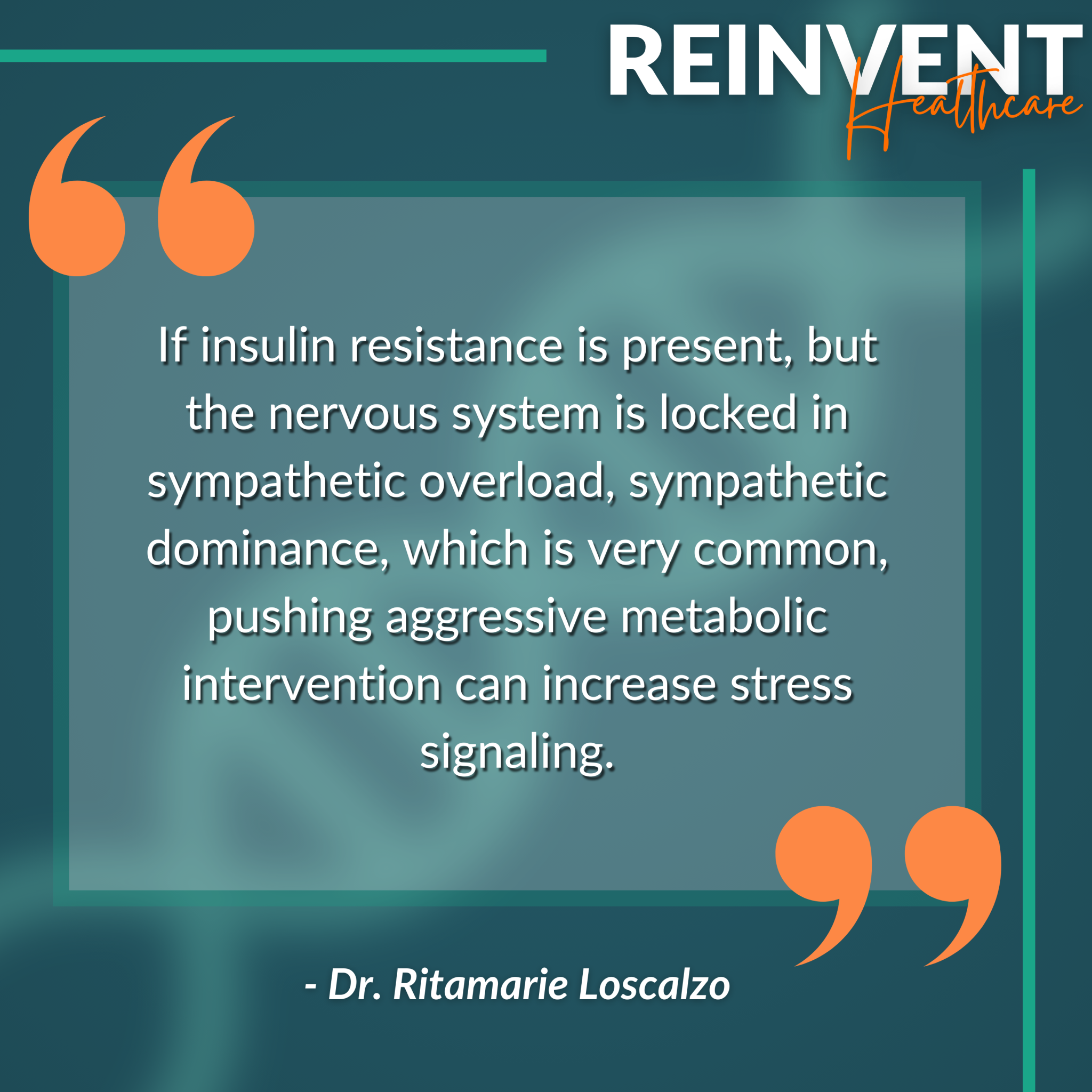
For example, if insulin resistance is present, but the nervous system is locked in sympathetic overload, sympathetic dominance, which is very common, pushing aggressive metabolic intervention can increase stress signaling.
If thyroid markers are low, but mitochondrial capacity is compromised and inflammation is high, stimulating conversion without addressing underlying regulation might produce minimal clinical change.
If gut markers are abnormal, but systemic metabolic signaling is unstable, if we focus just on antimicrobial or microbiome protocols, we might not restore resilience.
The lab tells you what is measurable, but it doesn’t tell us what is primary. When we get all these results back, and we see a lot of things out of balance, and we try to treat everything simultaneously, or treat the most obvious abnormality first, what we risk is overwhelming the system that is already overwhelmed and lacks regulatory capacity. It adds more stress to the mix. This is the hierarchy problem.
The body operates in layers. Safety needs to precede flexibility. Regulation needs to precede optimization. Responsiveness precedes performance. If we address those layers out of order, our protocols won’t work. Our plans won’t work.
That’s why two practitioners can interpret the same panel and build two completely different outcomes. One builds a protocol that the body can absorb and respond to with the state of the nervous system as it is, and the other builds a protocol that makes sense intellectually, but exceeds the body’s current capacity.
And quite frankly, I see this a lot. And I see these in the present environment where there's so much information available, where there's podcasts and YouTube videos and summits and doctor after doctor and practitioner after practitioner spewing out things of what people should do. And people come to us already on a boatload of supplements, and they wonder why they're not getting better. Really, it's because their system is overloaded.
And when we see protocols stall, or plans stall, the client and the practitioner tend to try to add more and do more, more supplements, more restriction. I see so many people with so much restriction, more adjustments, more fine tuning, but sometimes the issue isn't that the protocol is incomplete. It's that the system wasn't ready for it.
And here's the critical distinction. Lab data is static, physiology is dynamic. A lab value represents a moment in time. It doesn't fully capture the regulatory tone, the adaptive compensation, or the resilience of the person. So if we treat numbers without assessing capacity, we may intervene out of sequence. And that's where clinical thinking must mature.
Instead of asking, what does this lab value mean? We need to start asking, what does this lab value tell me about the body's regulatory hierarchy? Is this system stable? Is it compensating? Is it depleted? Is it inflamed? Is it stressed? Is it flexible? Because a protocol applied to a stressed, inflamed, insulin resistant system behaves very differently than the same plan applied to a stable regulated one.
It's not about abandoning these plans. It's about understanding the readiness of the client to be able to accept these. And the readiness is governed by context which brings us directly to the next layer.
If protocols stall because hierarchy is missed, then what determines the hierarchy? What determines the readiness? What determines whether the same intervention restores function or creates friction? That's metabolic context, and that's where we're going to go next.
So those of us who refuse to reduce complex physiology to trends, macro targets, or diet formulas are indeed the future of healthcare. So those of us who understand that the body really isn't broken, it's adaptive, it's intelligent, and when we restore signaling integrity, meaningful change follows. When we address the body where it's at now, where it's willing to be able to go and adapt, we can make meaningful changes.
Our work isn't just about looking at labs, and coming up with what imbalances are there, and then doing things, or giving the client things to do to restore balance. It's about restoring metabolic responsiveness, so the body can actually see the inputs and use the inputs that are being provided by these changes. If they're not ready, they're not ready. We have to do it in a proper sequence.
This level of thinking transforms your practice, and it transforms lives, which is the work that we want to be doing, why we're here. It's a work I've dedicated my career to, and it's why I'm so committed to building a community of practitioners who think in systems and lead differently. If you're listening and thinking, that's how I want to practice, then you belong here.
Visit inemember.com, and see how we train practitioners to restore metabolic resilience in even the most complicated cases. And if this conversation resonated, head over to the show notes for additional tools and resources.
Together, we are reinventing healthcare. And until next time, shine on.

Listen on your favorite podcast platform!





Share This Episode