The Vagus Nerve, Stress, and Sleep: Why Your Clients Can’t Heal When They’re Stuck in Stress Mode
Sleep issues are one of the most common complaints practitioners see and often one of the most frustrating to resolve.
Your client may be exhausted but unable to sleep. They may fall asleep easily but wake up at 3 AM and cannot get back to sleep. They may be following recommendations, taking supplements, and doing “all the right things,” yet their body still seems unable to recover.
In this episode, Dr. Ritamarie Loscalzo is joined by Dr. Navaz Habib, DO, also known as “The Vagus Nerve Doc,” to explore why nervous system regulation may be the missing piece behind persistent sleep challenges and chronic health issues.
They discuss how the vagus nerve influences the body’s ability to shift into a restorative state, why so many clients become stuck in sympathetic overdrive, and how practitioners can recognize the patterns that prevent healing.
Dr. Habib shares why the goal is not another one-size-fits-all protocol, but learning how to identify what each individual person needs to restore balance, regulation, and resilience.
What’s Inside This Episode?
- Why your client’s sleep problem may not actually be a sleep problem
- The hidden nervous system pattern that keeps many clients stuck in stress mode
- Why the ability to shift between sympathetic and parasympathetic states is essential for healing
- How a client’s stress history can reveal the turning points behind chronic symptoms
- Why the same symptom can have completely different causes in different people
- How blood sugar, metabolic flexibility, and stress physiology can influence nighttime waking
- The simple circadian rhythm strategy Dr. Habib uses to help clients improve sleep patterns
- Why sleep-disordered breathing is one of the most overlooked contributors to poor sleep
- How practitioners can use a framework instead of another rigid protocol to guide personalized care
- Why creating safety and regulation may need to come before adding more interventions
If you work with clients who struggle with insomnia, fatigue, inflammation, metabolic dysfunction, anxiety, or chronic illness, this episode will help you see sleep and nervous system regulation through a deeper root-cause lens.
Resources and Links:
- Download the full transcript here
- Grab your Beyond Protocols Guide for a step-by-step framework integrating genetics, labs, and functional assessments into root-cause solutions
- Join the Next-Level Health Practitioner Facebook group here for free resources and community support
- Visit INEMethod.com for advanced health practitioner training and tools to elevate your clinical skills and grow your practice by getting life-changing results.
- Listen to the episode on the vagus nerve: The Vagus Nerve Connection: How Low Vagal Tone Disrupts Your Metabolism and Gut Health
- Check out other podcast episodes here
Guest Resources and Links:
Learn more about Dr. Navaz Habib and his work:
- Visit Dr. Navaz Habib’s website: www.healthupgraded.com/
- Subscribe to The Vagus Nerve Doc YouTube channel: @VagusNerveDoc
- Gift for Practitioners:
Dr. Navaz Habib’s VAGUS Protocol Practitioner Course
Dr. Navaz’s Webinar Decoding Wearable Data - Link to RIng that tests Sleep Habits: sleepimage.com
Guest Bio
Dr. Navaz Habib, aka “The Vagus Nerve Doc,” is a best-selling author of 2 books – “Activate Your Vagus Nerve” and “Upgrade Your Vagus Nerve” and host of The Health Upgrade Podcast. After using functional medicine to overcome his own health challenges, Dr. Habib built Health Upgraded, an online health program implementing his VAGUS protocol, to guide parents and professionals to enhance their health by unlocking the healing power of the Vagus nerve to reduce the effects of stress and inflammation.
Transcript
Dr Ritamarie
Sleep, beautiful sleep. Everybody strives to get a good night’s sleep. We all know the power of getting a good night’s sleep, but how many of you have patients and clients who just can’t seem to get a good night’s sleep?
To me, it seems to be one of the most prevalent problems that my clients have, and I think it’s at the heart of a lot of their metabolic dysfunctions and other physiological problems.
Today, we are going to talk about how sleep and the vagus nerve are connected, and I have an amazing expert in this area that I can’t wait to speak to. It’s Dr. Navaz Habib. He is the author of a Vegas Nerve book that just drew me in. I was listening to it on Audible quite a while ago, and I after that, connected with him to do a podcast episode.
We did a great podcast episode about the vagus nerve, and as we were talking about it, we started to talk about sleep. I’m like, okay, we have to have a whole other episode on the vagus nerve and balancing the vagus nerve for good sleep.
He’s written two books, Activate Your Vagus Nerve. That’s the one I read, and then Upgrade Your Vagus Nerve, and that’s the second one that I listened to. He has the Health Upgrade podcast, and he’s been using functional medicine, first, to overcome his own health challenges, and then he built Health Upgraded, an online health program, underneath the Using the Vagus protocol and underneath the Vagus podcast.
We’ll talk more about that. We’ll talk more about him and how you can get in touch with him as a practitioner to get support on this. I highly recommend those two books. Without further ado, thank you so much for being here today, Dr. Navaz.
Thank you so much for being here and really sharing with us on this very important topic.
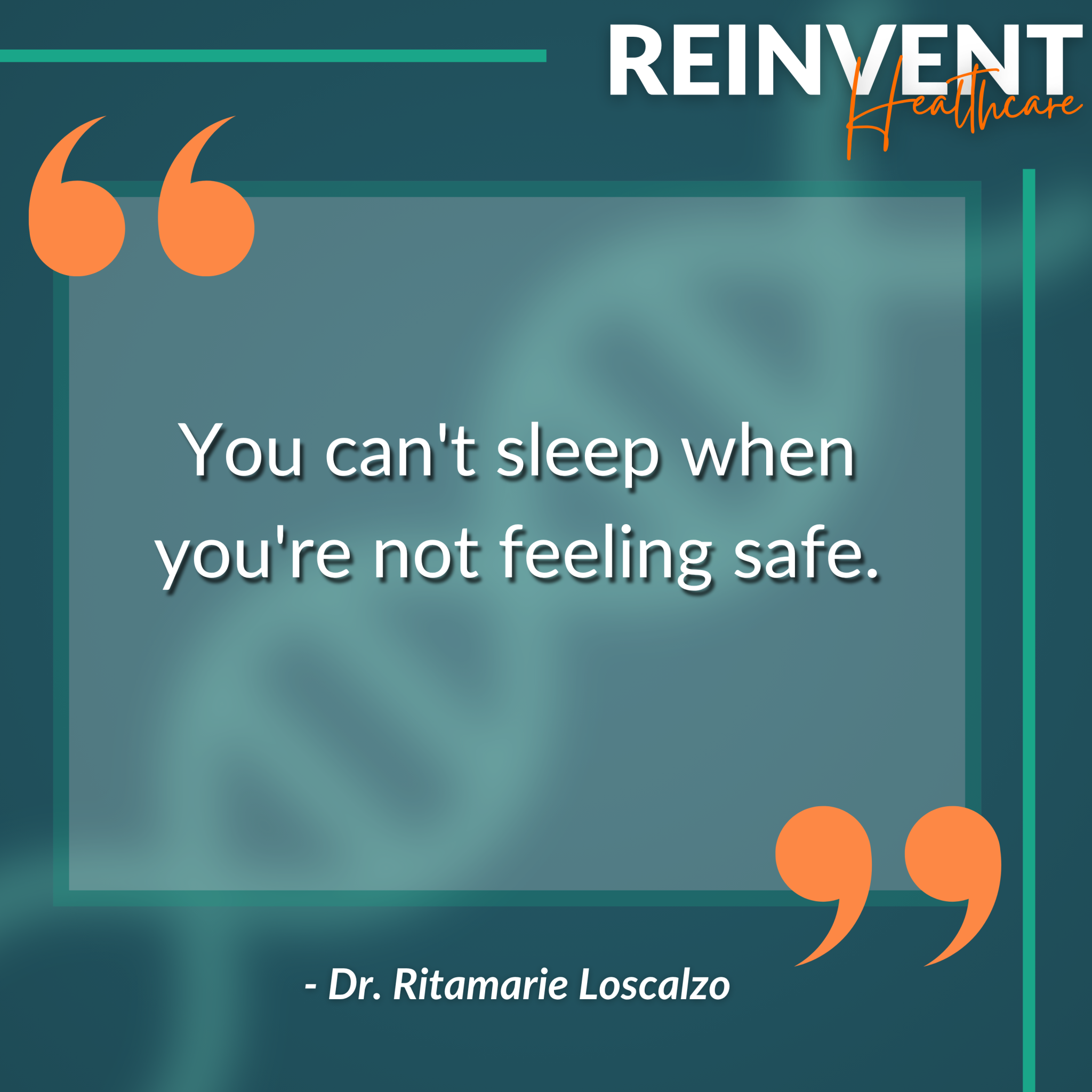
I can’t tell you, I would say maybe nine out of ten, maybe ten out of ten, maybe eight out of ten people, that I talk to have trouble either falling asleep or staying asleep, or waking up and then not being able to get back to sleep. Most of them are in what I like to call sympathetic overdrive syndrome, SOS. Their bodies are in SOS mode, and you can’t sleep when you’re not feeling safe. You can’t do it.
Let’s just jump right in and talk about sleep and the vagus nerve and how it’s all connected and how we can help support our patients and clients to get better sleep.
Dr. Navaz Habib (02:58)
I’m going to show you this, because it’s a very timely situation. My daughter came into our room at three o’clock, and you can see that I was woken up three additional times between 3:30 a.m. and 5:30 a.m., because she was throwing up. My sleep was incredibly disturbed last night and just such a timely conversation that we had planned out for weeks, but it was like it was meant to be.
Every night previous to this, and especially when we were on vacation last week, I had a wonderful sleep score. Everything was in the high eighties, low nineties on my Oura ring. I think this was the first night where it just kind of blew up, and it just happened to be right before our talk. It’s our real situation that a lot of people are dealing with.
Sleep disturbance is huge, and why it matters so much to the vagus nerve. Sleep is when the vagus nerve is most active. While we are asleep, our bodies are entering this mode of repair, of healing, and the signals to the immune system to create that repair process are sent via the vagus nerve. This time is when our HRV, heart rate variability, is the highest. It’s why we can track at night more effectively than during the day, because we’re moving during the night a lot less, ideally during the night. We’re moving more during the day, so it’s more difficult to get that proper HRV measurement.
What we’re seeing is very clearly there is an elevation in heart rate variability as we sleep or while we’re asleep, and that is showing us very clear evidence that the vagus nerve is active during sleep time.
I think there’s a few important factors when it comes to sleep that I’d love to dig into with you and really be able to kind of uncover where the challenge comes up for a lot of people. Some of the habits that we, even as clinicians, as practitioners, have that actually hold us back from being able to get ourselves really good sleep and why so many of our patients are suffering from a lot of these challenges.
I believe that a great sleep tonight began when you woke up this morning. Honestly, that is probably the time where you’ve kind of set an intention for the day.
There’s almost like a morning bookend type of situation where you plan out the day, and for a lot of people, that’s where we enter the sympathetic state a little bit more, I think, the priming that occurs in that initial stage of waking up and setting an intention for the day.
For me, it was rushing out to get my other daughter to her camp for the week. I was running late, because I had slept a little bit longer after my other daughter had fallen sick.
I was rushing and today it felt like a rush. Today felt like everything was in a rush. This is a very common situation when we’re not waking up with a moment of reflection, of calm, of setting an intention for the day. I think that sets an intention in terms of the cortisol release that we’re going to have first thing in the morning, and that cortisol pattern that we’re going to experience through that next phase of the day, and that drop-off that we’re looking forward to in the evening and night. There is a direct correlation between our autonomic nervous system, which is sympathetic-parasympathetic balance, and our hormones that are being released.
Cortisol being a big one there, obviously, as cortisol rises, the primer to tell cortisol to turn on is the sympathetic nervous system. As we’re coming out of sleep, we see that small increase in cortisol until we’re awake and then we see that big blip in cortisol depending on the type of cortisol testing you’re doing, whether salivary or urinary, you’re seeing this big spike.
Before that, we have a sympathetic activation that occurs, saying, “Okay, it’s time to wake up.” The recovery process, or the sleep process, is complete, ideally. Then we’re getting into a situation where sympathetics are turned on. I think that there’s a bit of a misnomer that the sympathetic nervous system is bad. I’m going to counter that. It’s not. It’s necessary. It’s absolutely what’s keeping us alive, and we need to have sympathetic activation, but we need to be able to come back to parasympathetic on demand.
We don’t want to be in a parasympathetic dominant state, just the same as we don’t want to be in a sympathetic dominant state.
We want to have what I call, autonomic flexibility, the ability to go on demand between sympathetic and parasympathetic. In the same way that when you’re driving your car, you want to be able to push the accelerator when you need it so the car can go, and you want to be able to push brakes and make sure that they’re working when it’s time to slow down. That’s kind of the concept here is you pushing the accelerator gently, effectively enough to be able to push your body into a situation where you can handle a new stressor, move towards a goal. Then when the time is right for you to push the brakes or to get your foot off the gas, do we now pull over to the brakes and slow down and go to parasympathetic state? That’s exactly the key.
Dr Ritamarie (08:38)
Slow down. That’s a key one. Not slam on the brakes and stop.
Dr. Navaz Habib (08:43)
Exactly. You want to have the ability to do so if necessary, but for the vast majority of our patients, what they’ve lost is autonomic flexibility. When they’re stuck in that SOS state, I love that by the way, the sympathetic overdrive situation. That to me is telling us that we have excessive weight or excessive pressure on the accelerator and not enough capability on the brakes.
That’s the pattern that we’re going into a sleep situation with. We have all of this extra pressure on the accelerator. We’re stuck in this sympathetic state.
Dr Ritamarie (09:22)
Excellent. Okay, so one of the things we do, I do as a practitioner, I’m sure you do too, is when we’re trying to understand somebody’s sleep problems, we’ll look at their cortisol. Is their cortisol up here when they’re trying to go to sleep instead of down here where it should be? And then what’s happening during the night? If they happen to be always waking up at 3 a.m., 4 a.m. and not being able to go back to sleep, what’s happening then? Is it cortisol, or is it something else?
Obviously there’s neurotransmitters and a lot of other stuff, but to try to see, is it a vagus nerve suppression kind of thing where they’re not being able to turn off the sympathetic or that the sympathetic, for whatever reason, an old pattern, an old trauma, whatever, that woke them up at 3 a.m., because their dad was beating up mom, and they always woke up at that time, and their nervous system still remembers. Whatever, there’s a lot of that stuff going on.
Tell me a little bit about how you ask people questions. What happens? Can you fall asleep well? Yes. Do you stay asleep? But you always wake up at the same time. Your daughter waking up last night was a unique situation. You don’t, every night, wake up at 3:30 with a throwing up kid, right?
Dr. Navaz Habib (10:437)
Of course. Nope, I certainly hope not.
Dr Ritamarie (10:41)
No. Right. What’s the best approach as practitioners to really help people? It is a challenging situation to try to figure it out and then also guide them to reverse it.
Dr. Navaz Habib (10:54)
Yes, it’s a difficult thing for people to wrap their head around that there may be some sort of memory or some sort of challenge that occurred in the past that’s holding them in a sympathetic state, and so it’s up to the practitioner, I think, to be able to guide the patient to work to remember some of these things.
There’s a practice that I have when I’m working with my clients called allostatic load timing. It’s like a timeline basically of trying to figure out when major stressors, major effects in their lives, took place and when they felt like they were under a lot of pressure. Okay. Usually there’s some sort of inflection point.
There’s an inflection point where they’ve gone from a state where they’re capable of going between parasympathetic and sympathetic effectively, and then some major series of events has occurred, and they’ve essentially been pushed into a state where they’re more primed to be in sympathetic mode readily. It’s very difficult to get into parasympathetic mode.
What I like to do is timeline that out, and I think that is a really effective practice that we can start to implement with patients. What that does is it starts to figure out, okay, this event occurred around this age or around this year. Just six months later, I had these symptoms start kicking up for this condition, or my sleep started being an issue around this time. There were financial struggles. There were relationship issues. My parents had a divorce around this time.
These are experiences that we need to start to actually implement and show to the patient that they matter along that timeline. That for me has been one of the most effective tools in a patient feeding in and understanding that what I’m doing is trying to guide them to figure out why it’s happened in the first place, why the sympathetic overdrive has become an issue in the first place, because when we timeline it out, you can physically see this is what occurred accordingly. That practice I think has been of highest value for me when I’m working with my clients.
Dr Ritamarie (13:12)
I love that. I do that a lot with people that haven’t gone decade by decade and look to see what events initiated pre, was predicated, or whatever, was before this change in their health or this particular health issue. and that’s super important. We need to know that. How does knowing that help them to change it?
Dr. Navaz Habib (13:40)
Right. Well, first off, once we know it, then we can at at least put a label on the fact that this is one of those situations that led your body into a state of sympathetic overdrive to begin with. Now it’s not necessarily closure, but it’s awareness. What lacked previously was first awareness.
Secondarily, now we can refer to a practitioner, or we can make recommendations, depending on the type of practice or practitioner that you are, to that patient to say, let’s work through some of the challenges that occurred around this time. It sounds to me like this moment was an inflection point in your ability to turn your body down into parasympathetic mode, and if it’s been something that’s a chronic stressor that’s slowly, slowly built up rather than an acute event, we can start to say, Okay, well, it started around here. Let’s start to work on your perception behind it, because what matters is not the event.
I think that’s really interesting here, it’s not the event that caused the problem, it was the perception of the event that caused the problem. Two people can go through the same objective experience and come out with completely different experiences, because they perceive them differently, internalize that perception differently. That happens in the insular cortex.
I’m actually in the process of doing a presentation on pediatrics and the vagus nerve right now. I’m presenting at A4M in a couple weeks, and this idea of when a situation occurred, or essentially the capability of this person to handle a stressor comes down to the perception of what’s occurred there and what needs to occur.
I think we talked about this in the last episode that we did, but we need to experience a feeling of safety. Safety is the driving feeling that turns the vagus nerve on. If an experience occurs, and it becomes buffered, if we have a parent, a guardian, somebody around us when we’re younger, and we have this experience, and it’s buffered, because that person said it’s not a big deal, you are still safe, and I’m going to show you how to respond in this scenario in a healthy, regulated manner, and we can bring you back. Then, that incident doesn’t imprint as heavily on that child.
What they’ve done is, they’ve gone into sympathetic state together, but the parent has taught how to come back to parasympathetic state. The parent has buffered that experience so that it didn’t mean more than it objectively was.
The issue occurs when a patient doesn’t have that buffering experience, especially when they’re younger. When they don’t have that experience of it being buffered, then what essentially happens is these small situations, or small incidents, can be blown out of proportion and imprint heavily on that individual. The buffering experience is the unique piece here.
The buffering is experience teaching inexperience how to enable safety and to note that this is objectively not the end of the world. That’s a very unique thing. If we create a baseline, and it imprints in the insula as something more subjectively worrisome for that individual, and it creates a level of anxiety a little bit more, what that means is anytime a situation comes up where that emotion or that experience is felt once again, we’re triggering sympathetic overdrive right away. It’s almost like the baseline is sympathetic overdrive.
Dr Ritamarie (17:44)
A lot of people have unfortunately experienced violence, incest, things like that when they were young. Certainly they didn’t feel safe, because it was usually someone they trusted that breached that trust, and now that’s imprinted in them, and they didn’t have that buffer.
Dr. Navaz Habib (18:06)
Yes, and that’s exactly right. It’s in fact worse when it’s a parent, a guardian, somebody whose responsibility is your safety, who is inflicting the situation upon you. That’s where bigger issues come up for a lot of people. I think it’s important to not necessarily dig into that issue with that person, but to explain that the stressor that they experienced was a trigger for why they’re in this sympathetic drive in the first place.
This could potentially be one of the reasons why sleep is an issue for this person. Does that make sense? Once we have this timeline of events, or these inputs, into what I call the stress bucket, which is pretty self explanatory, the idea of the stress bucket, how much stress is being put in and how much are we emptying out. Oftentimes as the stress level builds up, and it overflows, that’s where the issues occur
The chronic disease will occur in the overwhelm and overflow space. It’s because there’s a lack of experience on how to bring yourself back to parasympathetic, how to empty that bucket, lower the level.
Dr Ritamarie (19:23)
Right. It emptied, or at least lowered the level down. That becomes what we do, some of the processes we do to increase the activation of the vagus nerve, whether it’s meditation or heart math or tapping or stimulators or something like that.
Dr. Navaz Habib (19:41)
Exactly. For a lot of people, what they often feel like is emptying the bucket are actually incredibly unhealthy coping mechanisms. Examples of this is, just a very basic one is, comfort food. When we say the word comfort food, what we’re equating is the idea of comfort with safety, but they’re not the same, because you may psychologically feel safe by having comfort food, because it brings back positive memories.
But, tell me who’s had a healthy, comfort food experience. None of those foods, biochemically, are healthy and safe for us. We’re having pastas and huge meals that are making us feel almost sedated, and there’s a negative experience. That’s one big one. Alcohol, pornography, … we feel the dopaminergic comfort, but we don’t experience the actual emptying of the bucket. It’s almost refilling the bucket up but in a different spigot through a different pathway, through the biochemical pathway more often than not.
These coping mechanisms, although they psychologically feel good, are biochemically and physically not doing the job that they need to do. They’re refilling that.
Dr Ritamarie (20:57)
Right. And distracting you from actually dealing with the emotions that it’s bringing up.
Dr. Navaz Habib (21:02)
And more often than not, we go into that comfort seeking mode in the two to three hours before bedtime.
If we think about that, if we go into that mode, I forget where this came from. I know this is a legit experience, but decision fatigue is this real situation. For a lot of people, we can make a certain number of decisions in a day, and as the number of decisions reaches that number, we get over that number, it’s very difficult to make conscious, logical decisions later on in the day, and so we start to lean into more of these emotionally charged thought processes.
We start making decisions about how it makes me feel. It’s based on how we feel, not what we know is necessary to do. It’s harder to make better decisions near the end of the day, which is why so many people will sit down on the couch. This is an issue I’ve dealt with in my life. Sit down on the couch, and I’m like, this is my time to snack.
This is where I’m going to go and pick up some snack food, or I’m going to have something here with me, or some people will crack open a beer or alcoholic beverage before bed. What we’re doing is we’re putting our body into a sympathetic state in those two, three hours before bed. That’s time that we really need to focus on actually bringing down.
The stressors that we’ve experienced dictate our habits that were our coping mechanisms, and usually those unhealthy coping mechanisms are then affecting our sleep.
Our ability to get into that parasympathetic mode and have vagus nerve active through the night, enabling that full recovery process is significantly less in those last few hours.
Dr Ritamarie (23:02)
Interesting, because that’s what people do. They sit on the couch. It’s been a long day. They grab a beer or wine or whatever, a bag of chips, and watch something on TV, and usually it’s action oriented. They’re not going to watch some little love story that is all nice and cozy usually. Okay. That’s what I would choose.
Dr. Navaz Habib (23:22)
Depends, you can talk to my wife about that. We don’t watch the same things anymore.
Dr Ritamarie (23:26)
Not my husband. He’s going to choose something that I hear from the distant room and go, I’m not going in that room, because there’s too much shoot-em up. That’s a common thing, or they watch the news. It’s been all day and now I’ve been working, and I’ve been away, and I only want to know what’s happening in the world.
Here’s the thing though, what I find is that some people will have trouble falling asleep after eating late at night or watching that stuff. But, others fall right to sleep, but then they’re waking up at three, four, five in the morning and they’re done.
Let’s talk about biology, biochemistry, and what’s happening there.
Dr. Navaz Habib (24:09)
There’s a couple of differences here obviously. There are going to be huge variations in terms of genetics and processing capabilities and individual autonomic differences. Okay. They are what’s going to play this role of whether you’re one that’s able to fall asleep immediately and not have a huge latency period before you fall asleep, or if you’re one that is going to take a long time to fall asleep.
In practice, the thing that I’ve found is how much is your brain just rolling with thoughts as you’re going to bed? If you’re able to shut off thought effectively, you’re going to be able to fall asleep pretty quickly.
Shutting off thought, I think, half the people that are listening to this are going to be like, “Yeah, I can do that. I can shut off my thinking process. I’ll take a few deep breaths, and I’m good to go. I’m able to get into this easy, short latency, ready to fall asleep state pretty quickly.”
The other half of people are going to be like, “I hear that voice, or I hear these thoughts, and this is the time that now that I’ve gotten away from all the responsibilities, I can start to think about all the things that I need to do tomorrow, or that I’ve got stressed going on around me,” or “This is when my body kicks in, and now I’ve tuned into my body, and now I’m listening. What’s my body trying to tell me?” This is where we go into acutely sympathetic mode.
I think what’s happening is are you able to shut off and go into parasympathetic mode quickly, or are you not? Your autonomic flexibility, that’s step one here.
People that are able to fall asleep quickly, I think, are able to enter a parasympathetic mode more readily. First off, without a doubt, there.
What I actually think is waking those people up is blood sugar variations more often than not. If we have this spike of blood sugar and then it drops, and we go into hypoglycemia, that is actually what’s causing the wake up to occur more readily.
Dr Ritamarie (26:25)
We could tell that if we put a CGM on them and we look at it.
Dr. Navaz Habib (26:28)
That’s exactly the goal here. We can take a look and say, “You know what? You went hypoglycemic at 3 a.m. And guess what? You woke up at 3:30. Right? And because you went hypoglycemic, now our body was like, we need to get some sugar in us. We need to get some carbs. Let’s go get some food.” That’s the wake-up thought process, potentially, within the body.
Look at different things here as potentially being caused by this.
Autonomic flexibility is one thing, but metabolic flexibility is a huge contributing factor to autonomic capabilities. What I was going to say there is if you’re able to fall asleep relatively quickly, but you have these wakeups, I would tune into blood sugar variation as being a huge reason for why the wake ups are occurring, or it can be a heavy stress burden acutely during those periods. An acute stress burden, finances, kids, worries about work, and things like that.
That acute stressor is again another thing that’s pushing our body into a sympathetic state. Once we’ve gone through two or three sleep cycles, and we’re supposed to go through five sleep cycles in a regular night, in a monophasic sleep night, five full sleep cycles, we often will wake up, not in the middle of a sleep cycle, but at the end of a third or a fourth sleep cycle. That’s shortening the sleep down by 90 or 180 minutes. And that’s where the 330 wake up is kind of occurring.
We need to really look at the sleep cycles. When is the wake up occurring? Blood sugar variations, or are you acutely under some sort of psychological stress during that period of time?
The people that are on the opposite side here that have a lot of difficulty falling asleep, they’re either not tuned into their body or too tuned into their body.
Dr Ritamarie (28:25)
Let’s talk about that.
Dr. Navaz Habib (28:27)
They’re either hearing everything, or feeling everything that’s going on in their body when they’re starting to wind down, and they can’t tune it out. They have a lot of difficulty calming the voice in their mind. I have two daughters, and so the experience between the two of them at bedtime is very, very different. One can read, the older one, she’s nine, and she can read and fall asleep on her own. She generally doesn’t need anybody there, very, very comfortable to have like 30 minutes of reading and then fall asleep within five or 10 minutes. It’s just quiet, and you can kind of tell she’s able to tune her body down and be able to enter sleep mode.
My five-year-old daughter is almost the complete opposite. She needs loud, calm music. She says, I can’t hear it. It’s because what I assume, or what I’ve kind of put together with this, is she’s got this voice in her head, and it’s loud, and she’s tuning in, and she’s like, I can’t feel it, or I can’t experience it, and she can’t verbalize what’s happening yet within her body, but she’s so tuned into it, and she’s so pushed into the sympathetic state.
I think that is one of the reasons why latency can be lengthened out for a lot of those people. The ability to fall asleep quickly is gone. They tend to have this push into a sympathetic state at night, and that can be checked with cortisol levels as well.
If we see that bump in cortisol near bedtime or at the end of the day, that’s, I feel, a strong correlation between the ability to fall asleep quickly and not.
Dr Ritamarie (30:09)
That’s a good thing to look at, because it’s very easy to tell. It’s supposed to be going down.
Dr. Navaz Habib (30:14)
A nice little drop-off to virtually zero, and then the cortisol should kick up again an hour before you wake up. That pattern is something that I see acutely in my family, but I think that’s very, very important to try to figure out what’s causing that. What’s keeping us in that sympathetic state before bedtime?
There’s a couple different options here. It could be psychological stress, emotional thoughts, something that’s keeping us awake, and we’re worried about trying to figure out what that thing is or figure out a solution to that stressor.
It could be a physical stress, chronic pain, physical pain for a lot of people, being able to tune that pain down is very, very challenging. It could be biochemical stress. In biochemical stress, I really lean into the concept of leaky gut, the concepts of metabolic inflexibility.
Maybe you’re eating late, maybe there’s alcohol, maybe there’s something that’s causing that to not work. Alcohol is a unique one, because alcohol can numb the system to a point where you can fall asleep quickly, but it burdens the liver, and it burdens the body negatively internally and can wake you up later.
We really have to look at what’s the pattern of those three hours before bed. Are we doing things that biochemically will be affecting our body negatively? What’s going on physically? Could we add in a stretching protocol of some form, or a breathwork protocol of some form, to help to bring that calm experience down?
With my daughter, my five-year-old, what we’ve implemented is this breathing practice. She needs to self-initiate it, because I can’t tell her what to do. That’s my life now. She is something else. When she self-initiates it, we have this book that I found, which I’m so thankful we have. It’s called Bear’s Little Book of Calm. And it’s breathe, count one, listen, listen to what’s happening around you, and it goes to 12 different ones. Eat and breathe and exercise and move. These are all concepts that are included, but it’s a practice that she does guided with that book. All right.
There’s days where she doesn’t want to listen to the book, or she doesn’t want to hear it, and she doesn’t want to do this. We need to initiate a level of co-regulation with her first. That starts with me as a parent being calm. This goes back to the entire concept of the pair, the buffering parent, the parent who buffers that calm experience and initiates that co-regulation.
I’ve had a lot of experience now working with parents that have children that are dealing with ASD, they’re on the spectrum. What we found, really interestingly, is they need to feel in their body what’s going on, and they need a feedback mechanism for what’s happening in their body. Parents tend to not see that, so logically, they’re trying to say, I need you to calm down, I need you to do this, I need you to slow down, and the parents are not regulated themselves.
We’re trying to initiate a level of co-regulation, but co-regulation begins with parental self-regulation. One person needs to initiate the regulation to occur. They need to have in whatever form I can say this, they need to have a level of aura or a sense of calm around them that the person then feels safe entering.
This is the same in the practitioner-patient experience. If the practitioner comes into the room stressed out, worried, hand on the doorknob, ready to walk out, or they’re bringing their own issues into the call, into the room where they’re working with their patient, the patient is going to feel that stress. Whether it’s verbalized or not, they’re going to experience that.
Co-regulation begins with one person’s self-regulation. As clinicians, as parents, we need to start being able to create that regulation, so the people around us can then enter that station, that state of regulation and be then in a state of co-regulation.
Dr Ritamarie (34:42)
I was going to ask, as you said, the practitioner, but also partners, right? A spouse? They’re the hardest ones. If one’s having difficulty with sleep, and you’re like yelling at them, stop eating and stop doing this and do that, and that’s not modeling and that’s not creating that aura of calm.
Which is something that’s oftentimes hard in a relationship.
This is really interesting, because what I want to ask is so we have, I’m just going to say John, a patient, John, and John falls asleep, his latency is two minutes, three minutes, five on a really bad day. Right away. Okay. And yet John wakes up at three o’clock or four o’clock. Sometimes it’s to pee, but sometimes it’s like not really to pee, it’s just something else that wakes him up. Sometimes it might be the Pee, but he gets up, goes pees, comes back, and can’t fall asleep again, and can’t fall asleep again, and can’t fall asleep again.
In that case, if we look at the three hours before John goes to sleep, what’s the ideal that three hours should look like? It’s not going to be him sitting there and eating and drinking and watching an adrenaline prompting movie. What would that ideal be?
Dr. Navaz Habib (36:17)
I have a circadian rhythm rule that I use with my clients, and it’s a very, very simple rule. It’s the three, two, one circadian rhythm rule. There’s no food for three hours before bed, no fluids for two hours before bed, and no electronics or devices for one hour before bed.
Dr Ritamarie (36:36)
Okay. I like that, the three two one rule. I love it.
Dr. Navaz Habib (36:38)
The three two one rule. We want to keep it simple. These things need to be really, really simple for people to be able to implement and to sustain that implemented habit. I’m going to bed at 10:30 or 10 o’clock, 7 o’clock, I have got to finish my food. All right. No more drinks after eight. Drink my water before. Good to go. Had my electrolytes happy. Nine o’clock. Let me pull out my book. Let me do some breath work.
Let me do something like a journaling practice. Let me do some meditation. Let’s do something that brings us back into our body and is calm and is relaxing for that body in that situation where it’s priming us to enter sleep mode really effectively.
Dr Ritamarie (37:26)
I love that. Let me ask you a personal question. How consistent are you in following that?
Dr. Navaz Habib (37:34)
I’m probably around sixty, seventy percent. I’m not as good as I want to be, particularly on the device. I think these things are challenging. These things are very challenging to work on. The work is always there. I could always get here, and I can jump on Claude and ask Claude to do something every night if I wanted to. It takes a lot of willpower, no doubt, to make that work.
What I would say is the things that have worked the best are the days when the resistance level to follow along is the lowest. When my stress level is generally lower to begin with, it’s easier to follow along. It’s easier to not want to get caught up on doom scrolling for 45 minutes before bed.
The stress level will play a huge role. It does depend on the communication that I had with my wife. It depends on the experience that we had putting the kids to sleep. Or my work day, if there was a difficult patient or something that kept me up, then that is going to make it more difficult for me to follow along with that rule for sure. No doubt about it.
If the circumstances are aligned, or you do your best to minimize the resistance to put your phone in a different room, or turn off the color on the screen, that’s an option as well to make it less something that you’re excited to want to use.
I even have the option of bringing in my red light glasses. These are great little glasses that I use particularly if I’m working a little bit later on the computer, but these are Viva Rays, and they have these yellow blocking lenses first off, okay, so you can see me doing this. I don’t know if everybody else can, but these are my yellow lenses and then I have the option of adding on late night working at the computer, and I really want to block out everything. I’m not allowing the bright white blue light to come and enter my eyes and so there are ways to adjust this.
Essentially if you need to be working, there’s work that needs to be done, but you don’t want to get the blue light in, put on red light glasses or blue light blocking glasses and work, then you can get the work done.
The stress of the work getting done is gone, but the stress of the light is not affecting you.
Dr Ritamarie (40:08)
Minimizing the stressors in other words. Yeah.
Dr. Navaz Habib (40:10)
There are tools that we can implement to make it so that the stress level that we are actually experiencing is lowered, and so the circumstances are easier to follow along.
Dr Ritamarie (40:19)
It’s interesting you say that it’s when the stressors are there that it’s harder and that’s when it’s most important.
Dr. Navaz Habib (40:28)
Which is why it’s so challenging to do that. When the stressors are there is where the decision fatigue gets to a lower level. When you’re at a higher level of fatigue, you have to consciously work through it.
This is where I think having the support of a spouse, having an accountability partner, or something that you can go back to, having a journal that you’re adamant about completing on a daily basis, having a ritual, having a plan that even under these stressful circumstances, you’re able to follow through with the intended goal here. That, for me, is what we should be looking for.
Dr Ritamarie (41:12)
Absolutely. I think that’s important. I wanted to mention another stressor that you haven’t mentioned that I just want to share with people how high on the list of stressors it is, is the electromagnetic field.
We don’t turn our Wi-Fi off at night. We leave the phones in the bedroom, because we don’t know when one of the kids is going to contact us, so we don’t want to put it on to airplane mode and my husband has a clock, which is beyond me why he needs a clock by his bed, but when I look over to his side of the room, I’m like, whoa, I don’t want to see that side of the room, because there’s just a lot going on. How much does that affect? It doesn’t affect his ability to fall asleep. He’s kind of like John, but it affects his ability to stay asleep.
Dr. Navaz Habib (42:04)
If you’re waking up in the night and the lights are bright, it’s difficult to fall back asleep. That’s where I would work on some sort of dimmer switch on that clock or have it ideally as low as possible. We want to experience, we want to create an optimal sleep hygiene experience.
Blackout blinds are one of the best options here. Minimizing the light that’s present is a huge piece of the puzzle. If you can turn off the Wi-Fi and just have your phones connected to the 5G or whatever at night. It’s not necessarily going to airplane mode, but maybe we can turn off the data setting at night, so there’s less of a connection that’s occurring with the tower that’s a few hundred meters away from home or something like that. We want to minimize those experiences so that we can ideally decrease the EMF exposure, decrease the energy that is around us. This is around us.
If you don’t live in a rural area, you live where there’s a ton of 5G and 5G plus and EMFs. We’re in these experiences where the EMFs are very high. Electric cars and all these things, and people have these new challenges that are occurring. I will say that it’s dependent on the individual sensitivity levels. I like to think of this great analogy that I think will work.
Some patients are like dandelions. Nothing is going to affect them. They’re going to grow every summer without fail. They’re just going to show up, enough water, not enough water, no big deal, whatever.
Then we have patients that are like orchids, and the orchids are the more sensitive, and they require more of the inputs, and they require more of the targeted approaches. Those are the patients that we really need to focus on eliminating as many of those challenges from.
Not to say that everybody should be exposed to EMF, but some people aren’t as sensitive to it as others. For most people now, our cell phone is our primary communication with our families, with our loved ones, with everybody around us. If you’re waiting for the kids to call, I can’t turn my phone off at night. Like it’s just not possible.
How do we do that? I’ll shut off the Wi-Fi. We have a timer on our Wi-Fi, so it goes off at 10:30 or 11 p.m, and then it’ll wake up or turn back on around five. It at least shuts off for a period of time. It’s just like a Christmas tree timer. Same idea. It’s a very simple tool, $12 on Amazon or something like that. Plug it in on the wall, and it does what it needs to do. It covers turning off Wi-Fi. There are little hacks, there are little tools that we can start to implement.
There are clocks that have the ability to ramp up light beginning at 6 a.m. or 5:30 a.m. so that the light level in the room increases. If that’s what we’re worried about with blackouts, there’s a lot of tools out there that we can start to utilize. Even the idea of if you want to keep your cell phone in a different room, that’s great. There are these Bluetooth-based phone connections that we can start to utilize if you could have a handset for the phone in the room, and it’ll ring if there’s a phone call, but you don’t have the cell phone with you in person.
Dr Ritamarie (45:36)
Does that make a difference? Because you’re starting the blutooth.
Dr. Navaz Habib (45:39)
It should make a difference, I think, just in terms of not being able to go and do Doom Scroll for the hour before bed, so hacking that experience, I think, is one of the things that the orchid type patient requires a little bit more of rather than every dandelion type patient that we need to worry about.
Dr Ritamarie (46:00)
We’re looking at several different levels here. I know it’s probably different from person to person, because we don’t believe in protocols. We believe in personalizing, but given the priority, like, okay, so the three, two, one, the turning off the bluetooth, turning off the Wi-Fi. Where would you place it in average? I mean, of course it’s going to be different from person to person.
Dr. Navaz Habib (46:22)
It’s going to be just like you mentioned, it’s not a protocol, it’s a menu. I think we utilize it as a menu. If the person is particularly stuck on being on their phone in the evenings, that’s the person that we’re going to work to turn off the Wi-Fi and get rid of the phone from their room.
If it’s a person that doesn’t care to have their cell phone, I don’t care about their Wi-Fi generally at that time. I’m more focused on what’s going on with their blood sugar? What’s going on with their breath during the evening, during the night? What’s their breathing experience like? We didn’t even get into this concept of sleep disordered breathing, which is enormous when it comes to waking people up. Enormous. Sleep disordered breathing is one of the most overlooked and missed pieces to the puzzle in sleep disturbances.
Dr Ritamarie (47:11)
Okay, so let’s talk more about that. What is that? What do you mean by sleep disordered breathing?
Dr. Navaz Habib (47:16)
Sleep disorder and breathing is essentially that you are stopping breathing, or there’s some disturbance in the breath pattern that a person is having through the night.
What that’s doing is it’s affecting a lot of what’s going on. This is the most generic, the most obvious one is obstructive sleep apnea, OSA. Most people don’t know they have OSA until they’re sleeping beside a partner, and they’re like, “You stop breathing in the middle of the night, and it scares the crap out of me.” Or, “You’re snoring really loudly, and it scares the crap out of me,” and they go, if they’re not reluctant, will go and have a sleep study, and they’ll say, Yeah, you stop breathing 38 times a night.
It sucks, but it’s one of those things that we’ve now found a potential reason, because every time you stop breathing, or every time your breath is limited through that night, it affects your blood sugar, it affects your cardiovascular system, and it heavily pushes you into a sympathetic state. It’s putting your body under undue or unnecessary stress.
Sleep disordered breathing is one of those things that we cannot forget about, we cannot miss as clinicians, as practitioners. Sleep studies are great.
Now we have these wonderful, not necessarily the retail versions. They’re good as trend trackers. My oura ring, I’ve used now for I think seven and a half years, which is crazy, but there are devices that actually are FDA cleared for tracking OSA, or sleep disordered level, and looking at HRV through a whole night, and it’s a ring. It’s amazing stuff. For 30 days, you can have this person utilize it, and be like, we can see the trend data as strong as, in fact, better than the sleep studies that happen in the labs on a ring that this person’s wearing now.
Really cool stuff that’s out there. The finger ones have the options as well, but it’s minimally intrusive, which is, I think, really powerful. It gives us data in that person’s home, which is different from a sleep lab experience.
I think we’re in a situation now where we can analyze that and get that data far more readily and be able to understand, okay, your heart rate is dipping too late in the night. It stays high for the first half of the night and then it slowly starts to dip off.
That’s a pattern that we see. What’s happening in those two, three hours before bed? Are you snacking on the couch? Is there a stress level? Did you have a fight with your wife every night that this happened? What happened here that caused your heart rate to go up or your HRV to stay low early on in the night and then it came up later, and it took time for your body to enter that parasympathetic mode.
Once we can start to pattern that out and start to identify the patterns or the habits or the triggers for that individual person in that N of 1 study that we’re doing, we can then objectively come up with a menu-based prescription or recommendation of how can we change the habits of this person to enable sleep to become optimized.
Dr Ritamarie (50:37)
Yes, that’s great. That’s great. I speak out a lot about how anti-protocol I am, because everybody’s about here’s the protocol for this and the protocol for that, but really it there’s not a protocol for a condition, it’s a protocol or plan for that particular person.
Dr. Navaz Habib (50:56)
At that particular time, based on their particular desires, because it’ll change. It’s dynamic. A person who has decided to eliminate 20 pounds of excess body weight versus a person who’s training for a marathon are going to have completely different things, and that could be the same exact person, but at two different times in their life.
Dr Ritamarie (51:17)
Beyond Protocols is a little series that I put out there, so anybody who hasn’t downloaded that yet, check it out in the show notes, the Beyond Protocols, because it isn’t a matter of identifying a protocol for sleep disruption, a protocol for sleep apnea, or a protocol for hormone dysregulation. It’s a matter of what’s going on in this particular person. I love that distinction at this particular point in time. Wow.
Anything we missed in in this discussion.
Dr. Navaz Habib (51:45)
I’m sure there’s a thousand things we missed. We could go on for hours and hours, Ritamarie. I love having these discussions with you. I think we’ve covered the big guys. The circadian rhythm rule, the three-two-one rule really covers a lot of it. Sleep disordered breathing is a big piece of the puzzle and cannot be missed. It’s definitely something to look into. Blood sugar levels are huge.
In my VAGUS Protocol. Haha. Funny, it’s called a protocol. It is very much a menu. It’s very much a framework or lens through which to approach a patient, not a protocol of prescription to provide. I’ve broken it down, V stands for validate. Let’s figure out exactly what really is happening with this patient. What’s happening with their HRV, what’s happening with their blood sugar, what’s happening with their organic acids, their stool, their microbiome. Let’s figure out what’s happening in terms of them.
A is activate, and activate is in regards to getting the vagus nerve back up and running. For most people that are in a chronic situation, or a chronic health challenge, what they’re dealing with more often than not is chronic sympathetic mode. They’re in this sympathetic overdrive syndrome, SOS mode.
More often than not, it has everything to do with the fact that their breaks, their vagus nerve, is not able to be activated as easily on demand as it needs to be. That’s what activate is all about, and it’s very much a menu.
Start with the breath and then continue on from that breath pattern, humming, chanting, gargling, singing are vagus nerve stimulators, tapping. Bring in the tools that you can to help activate or deactivate from sympathetic mode and to activate parasympathetic mode, because healing can only happen in a parasympathetic state.
We can give all the prescriptions, all the herbs, all the meds, all the supplements. If a patient is not in parasympathetic mode, they will not heal. Period. Healing is only possible in a parasympathetic state to begin with, so we need to enable that process, and that’s why A, activate, is so early on in this process.
G stands for gut brain immune optimization. Let’s work at optimizing their gut, their brain function. Sleep is a huge piece to that immune system function that has everything to do with the mitochondria. Let’s focus our attention on the mitochondria as the target of everything that we’re doing. The vagus nerve speaks directly to mitochondria, just so you won’t.
Then we get into unburden. That’s the U. When it comes to unburden, it means let’s start to identify the situations where burdens have occurred. Let’s provide new meaning to them. Let’s provide a little bit more of an objective experience rather than having to feel what they’re feeling every time we rehash a thought. Let’s start to reframe this for a person so that it’s not as burdensome on them, and it doesn’t push them into that sympathetic state as often.
S, because V A G U S, S stands for sustain. How do we make this a long-term practice? How do we enable mindfulness-based habit practices to enable stress reduction long-term? The work that we’re doing with them, the work that they’re doing themselves, because 90% of the time they’re doing the work themselves, how long is it going to last? We want it to be sustainable.
I’ve built out my VAGUS Protocol for practitioners course, and I’m teaching this entire process to practitioners who are interested in getting this. That program is available at the end of August.
Dr Ritamarie (55:27)
Check the show notes for the information about the VAGUS protocol program for practitioners and also for information about the ring that tests for sleep habits.
Wow. Lots of great stuff here. I really, really appreciate the way you very carefully map it out and put it all together. It just makes so much sense. So many people are suffering from sleep disturbances, because so many people are suffering from sympathetic overdrive syndrome. They’re in SOS mode 24/7.
That’s the piece where we have to start by getting the nervous system feeling safe. Quite frankly, the first time I really looked at this was when I was reading the Why We Sleep book by Matthew Walker. He said, it’s very vulnerable to fall asleep, because we’re not conscious. Out in the wild, you fall asleep and somebody can come eat you. We’ve maybe pulled some of our ancestral feelings, and stress, about sleep, and it gets in the way.
Dr. Navaz Habib (56:34)
Yes. It’s a lack of safety. If you feel safe falling and staying asleep, you will remain asleep. If you don’t feel safe, you won’t. Safety has so many different avenues that create it, but this is exactly the idea. Safety is the driving force behind it all.
Dr Ritamarie (56:50)
Safety is the driver. Create a feeling of safety. Help your clients, patients to create that feeling of safety, create an environment where they’re safe and let them fall asleep and stay asleep.
Thank you so, so much. We have been talking to Dr. Navaz Habib, and I am so thrilled with what you’re doing and how you’re doing it. We’ll have your links to your podcast and your books and all that in the show notes so that you can follow up.
I absolutely loved your two books. I listened to them on audio. I think a couple, three times actually, while I’m running, running away from tigers.
Thank you so much for being here, and thank you all for listening and for being a part of this practitioner community where we’re trying to change the face of healthcare.
It’s truly based on helping individuals get to their root causes, not the root cause, but their root causes, as opposed to just covering up symptoms and moving from there. So thank you for joining us. And until next time, shine on.

Listen on your favorite podcast platform!





Share This Episode